by Kevin T McEneaney
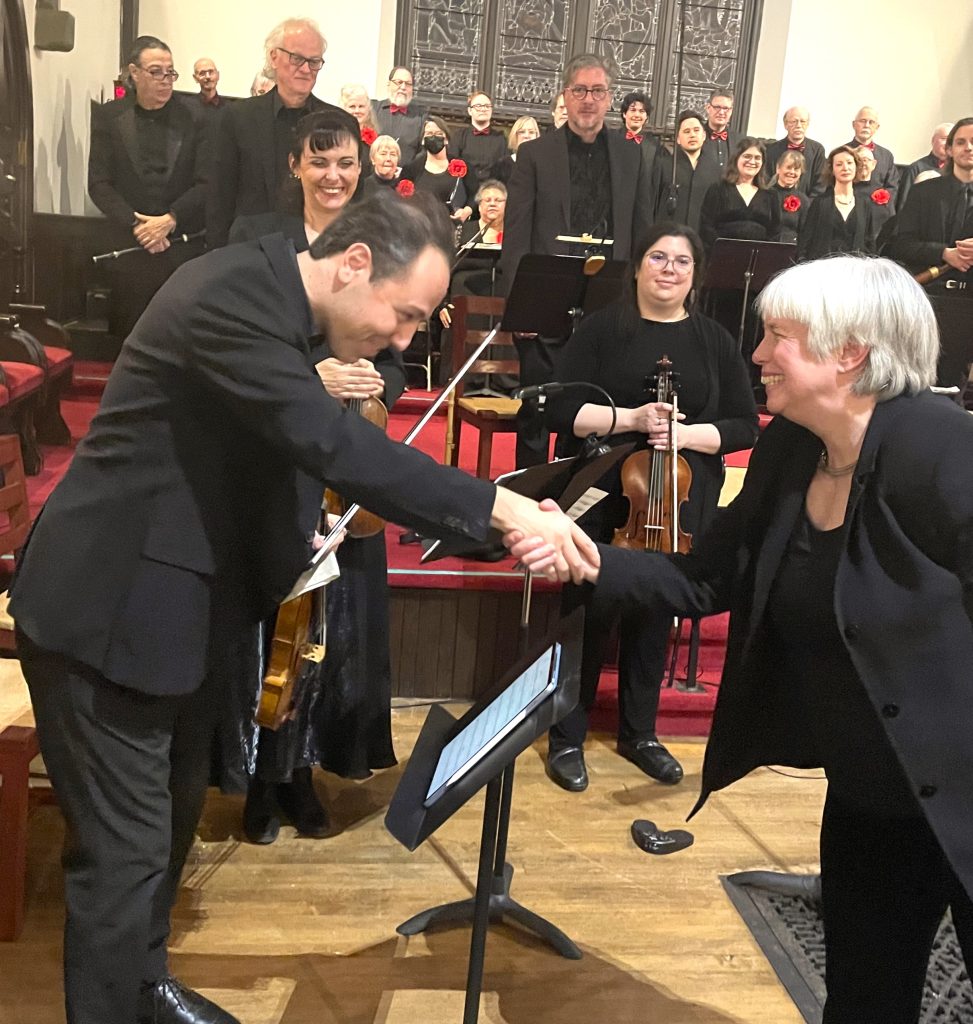
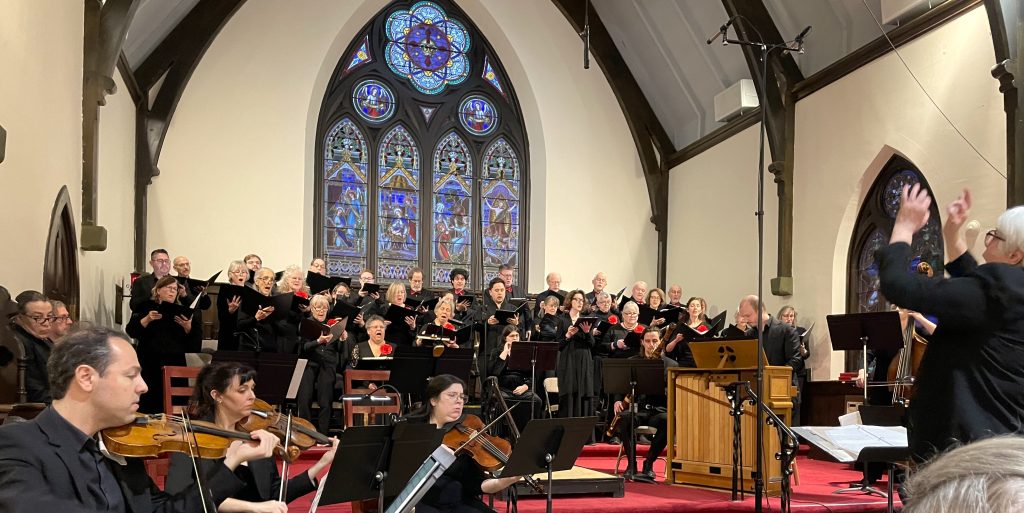
Last Saturday and Sunday, Crescendo, under the direction of Christine Gevert, provided an unusual choral program from the Baroque era, the Saturday concert being performed at St. James Place in Great Barrington and the Sunday concert at Trinity Episcopal Church on Sunday. Countertenor Nicholas Tamagna sang on Saturday, yet he awoke with laryngitis on Saturday morning. Christine made a series of frantic phone calls and managed to hire Scottie Rogers, who is pursuing a second master’s degree at the Yale School of Music, who sang with marvelous grace. As they say in show business, the show must go on, despite any impediments!
The nearly forty-strong chorus opened with “Hosanna filio David” by Friedrich Weissensee (c.1560-1622), who was a Protestant minister as well as an important composer from Thuringia, Germany; he was famous for his 74 motet compositions. This choral song was short and delightful, displaying deft musical emotion with Edson Scheid on lead violin.
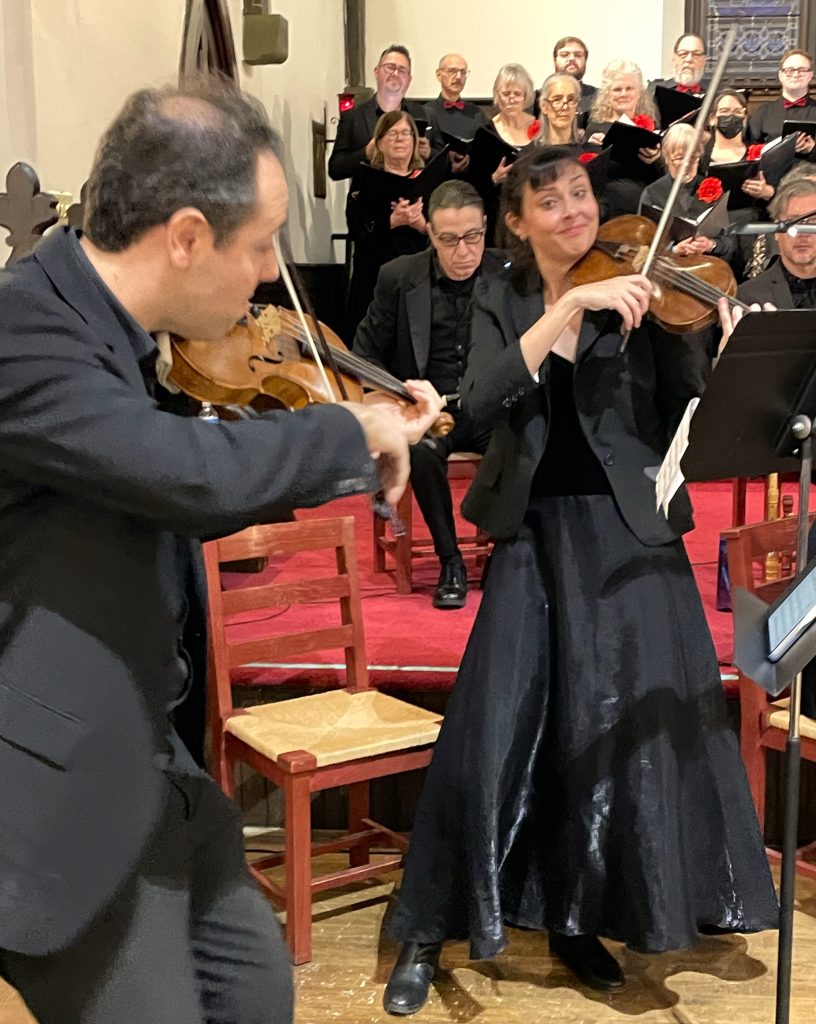
“Et tu Bethlehem terra Juda” by Georg Otto (1550-1618), Hofkapellmeister at the court of the Landgrave of Hesse-Kassel, which narrates the story of the Star hovering over Bethlehem and the visit of the wandering Magi recorded in the narrative of Mathew, set in the year 4 BC when Yeshua was born in a Bethlehem manse. In this work, the second violinist Sophie Genevieve Lowe stood out with lyrical panache.
These two German composers developed the polychoral style that intensely influenced J.S. Bach.
SüBer Trost, mein Jesus kommt” by J.S. Bach, Cantata BWV 151. This longer work, written for the feast day of John the Evangelist, offers substantial solo roles for four performers. The melody is a central architectural lever in Bach’s more complex organ compositions. The opening Aria was sung superbly by Soprano Jennifer Tyo Oberto, who performs throughout New England as a soloist. Scottie Rogers with ethereal appeal. I was especially impressed by Baritone Will Doreza, who performed the bass role. The Alto Aria was sung with impressive cadence by Scottie Rogers. Tenor Pablo Wiley-Bustos sang of salvation with assertive authority. The narrative of this cantata carries deep personal conviction rather than the doctrinal pablum of Vatican, Italian orthodoxy.
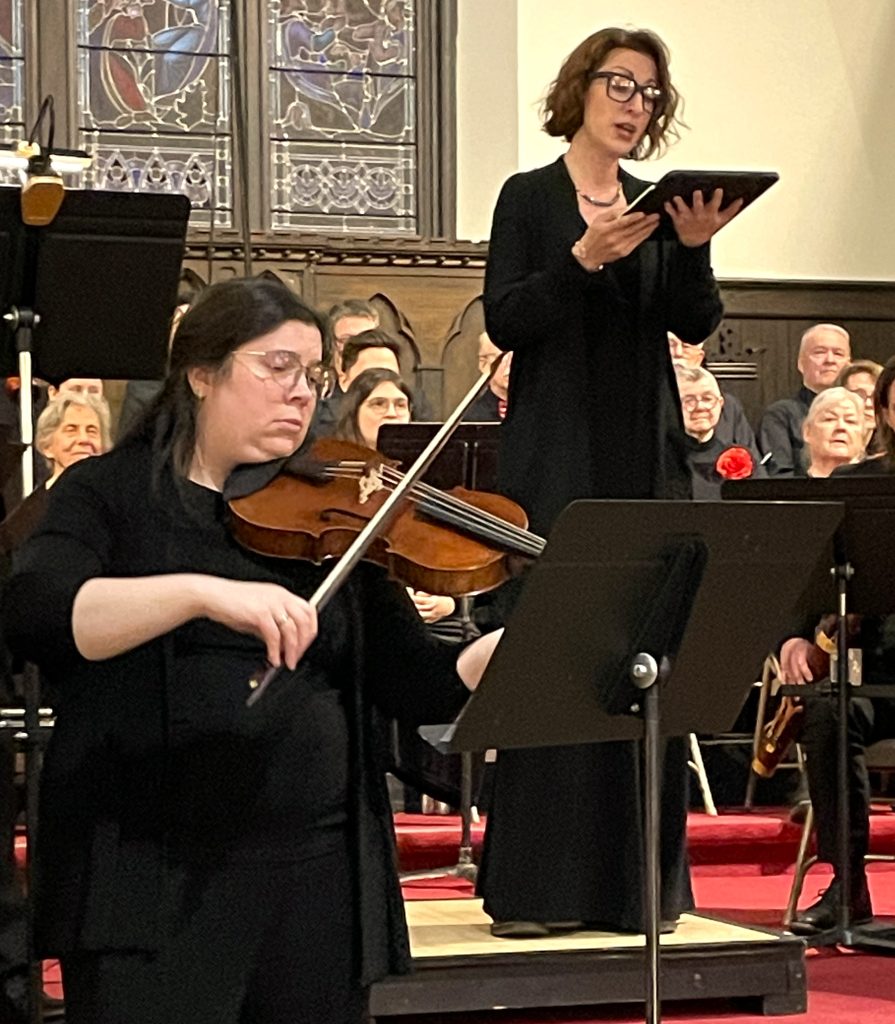
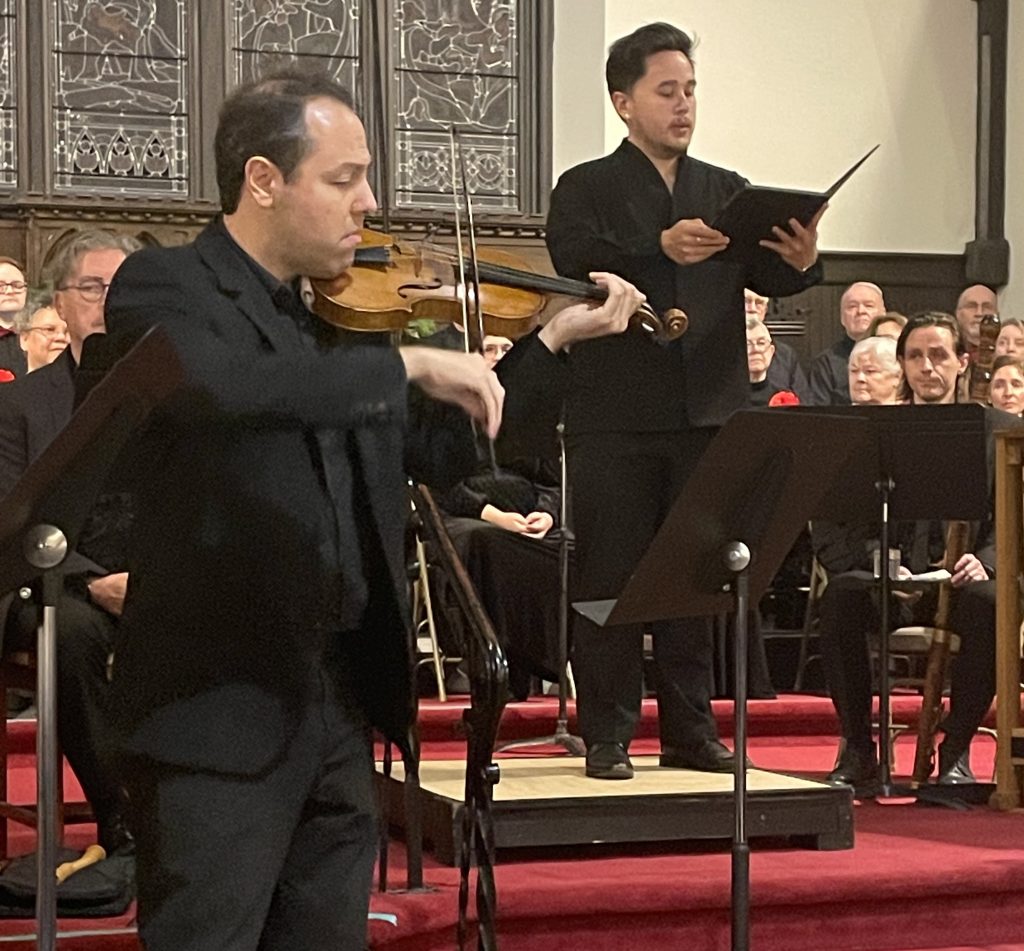
After an intermission, the concert featured two excerpts from Missa in G minor, BWV 235 by J.S. Bach, which opened with a short, repetitive Kyrie eleison, the oldest known ritual hymn in Christianity. The following lengthy Gloria, with a Lamb of God theme, was a dialogue with the chorus between bass and tenor. Once more, the dialogue was personal and not doctrinal. Here, the organ played by Dylan Sauerwald was impressive.
“Lobt Gott, ihr Christen, alle gleich” (“Let all together praise our God”) by Leonhardt Schröter (c.1532-c.1601), a German Renaissance choirmaster, teacher, and composer at Magdenburg; this was a pithy, genial example of gratitude which the whole congregation sang in English with emphatic seasonal joy.
A brief “Hosianna in der Höhe” by Michal Praetorius (1571-1621), one of the most versatile composers of the era who influenced the compositions of German hymns, concluded the concert.
The orchestra featured ten Baroque instruments with an impressive and articulate blend of sound. Christine Gevert conducted both the choral singers and orchestra with vivid majesty, evoking cheer in the face of cold winter blasts!