by Kevin T McEneaney
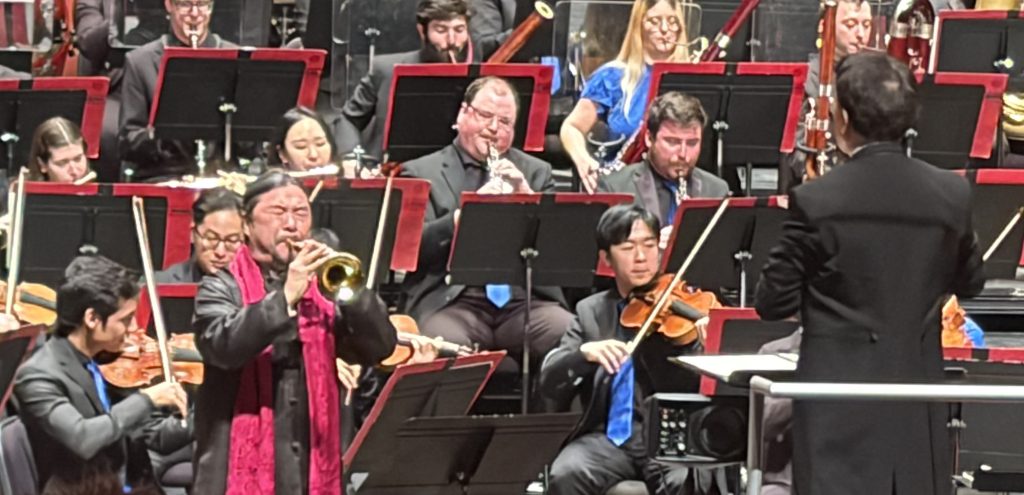
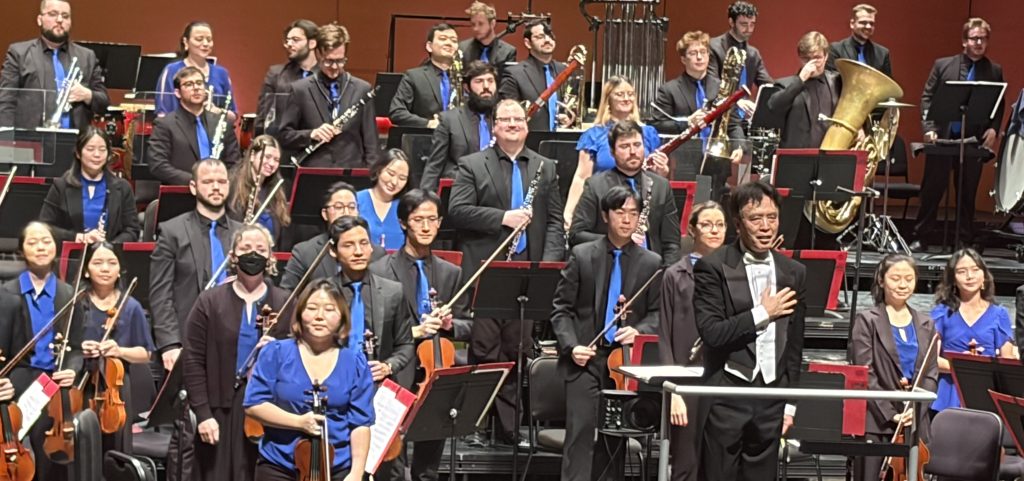
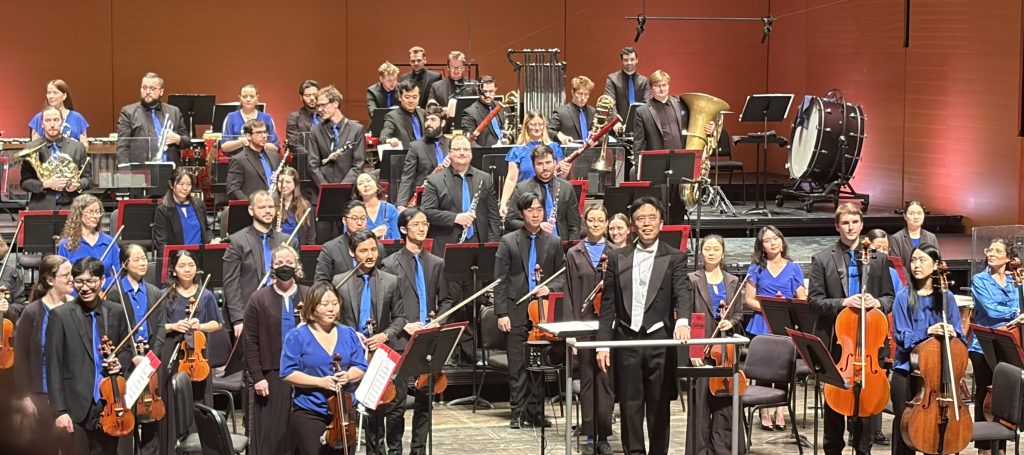
Last Saturday, Sosnoff Hall at Bard College featured The Annual Lunar Chinese Festival, where The Orchestre Now exploded with marvelous panache under the energetic baton of Jindong Cai. (The program was repeated on Sunday at Lincoln Center in Manhattan.) This was the Seventh Annual “Sound of Spring” concert.
There was excellent attendance turnout at Sosnoff, which indicates that people are finally catching on to the syncretic pleasure of blending Chinese folk music with Western classical music, an intersection that offers greater awareness of top-tier soloists performing on their native instruments.
They opened with Spring Festival Overture (1956) by Li Hanzhi (1919-2000). This cheerful and optimistic classical composition, whose recording was famously flung into space during China’s first lunar probe, promised rambunctious excitement that set the table for a sumptuous musical feast.
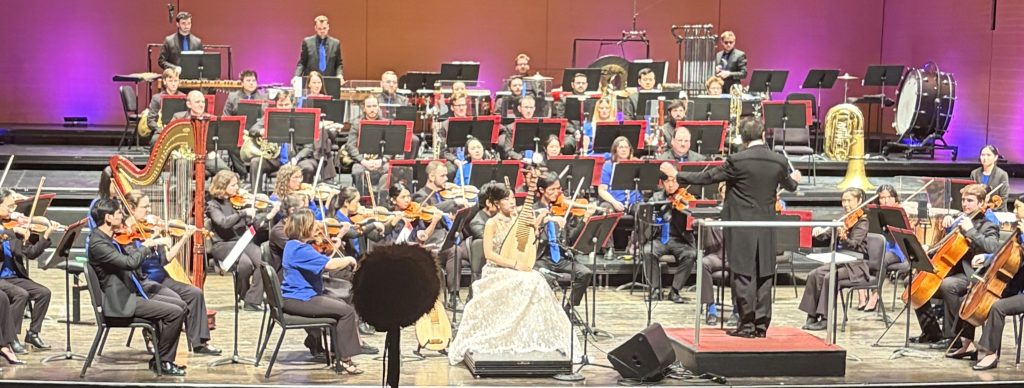
Cloud and Blossom concerto for pipa and orchestra (2013) by Wang Danhong opened with the sound of a flute by Wen-Hsui (Angela) Lai, conjuring scudding spring clouds, evoking a sense of synerthusiastic, visual delight. Xiaoyan Zoey Luo, dressed all in white, performed the pipa (sensible, frantic, cultured) with exorbitant finesse that conjured otherworldly wonder.
Concertino for the Horn and Orchestra in E Minor, Op. 45 (1806) by Carl Maria von Weber featured Jin Zhicheng on exuberant French Horn. This composition became a Paris Conservatory test on the technique known as multiphonics, which demands a four-note chord that highlights the interplay between humming and the horn’s sound as it blends with the orchestra in tour-de-force agility and breathless excitement.
Sunshine over Tashkurgan (located in northwest China) by Chen Gang (1976) provided an opportunity for the virtuoso violinist Luo Chaowen to embrace the ancient roving landscape that was once an important city on the Silk Road. Performing with accuracy and passion, Luo’s vibrant tonality outdid the whole orchestra.
Luo continued to star in Polonaise de Concert in D Major, Op. 4 (1852) by Henryk Wieniawski, where the rhythm of the Polonaise dance delivers an infectious and transporting urge to get up from one’s seat to dance!
So the first half of the concert was a mélange of city and landscape visions that brought the listener to lean into the direction of the hypnotic orchestra.
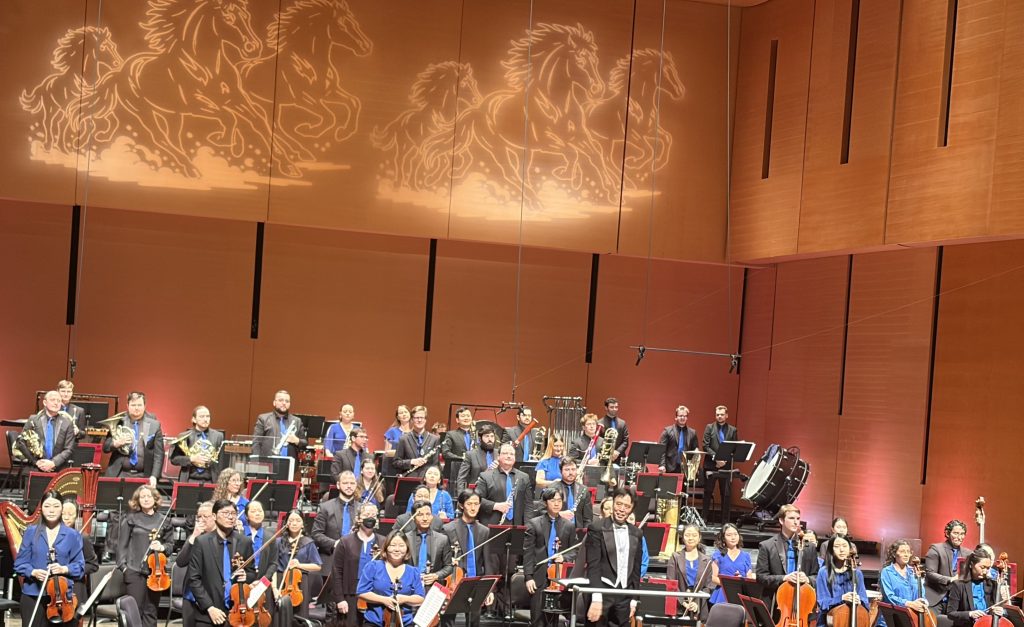
The second half of the concert thematically centered upon the image of the horse in the Chinese Lunar Calendar (lunar calendars are more accurate than solar calendars). The year of the fiery horse begins on the seventeenth of this month. The fiery horse evokes rapid changes in circumstances and kingdoms.
And so it was appropriate to begin the second half of the concert with Richard Wagner’s “Ride of the Valkyries” movement from Die Valkyries (1870). Here, The Orchestra Now unleashed the cellos under Nohyoon Kwak, the relentless horns under Jaxson Padgett, the galloping trumpets under Giulia Rath, and the deeply resonant trombone of Yuki Mori, which evoked earthquake.
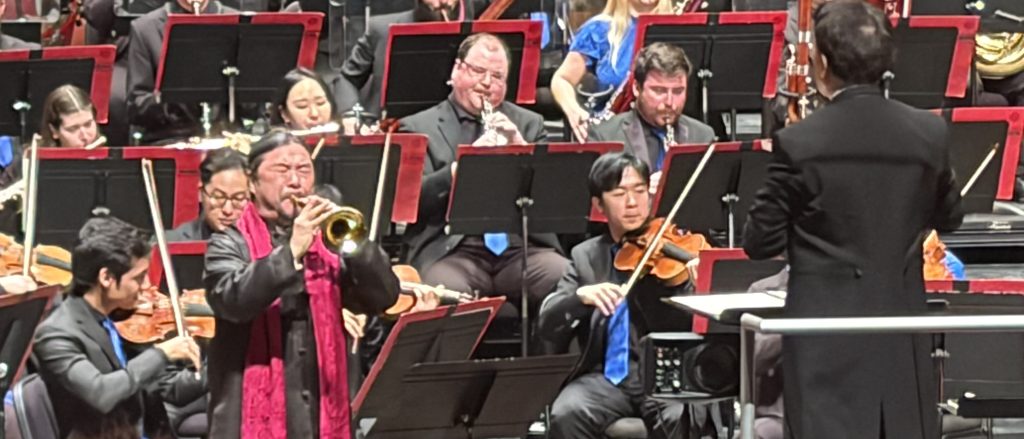
Continuing the theme of transformation: A Grand Victory Shanxi folk music for winds and percussion (1957), arranged by Zang Shiye, yet here in a new arrangement by Lin Miaoling (2026), a world premiere event, with Yazhi Gao and Hiu Man Andrew Chan on suona, where their wind instruments sounded like they demolished walls….
Light Calvary Overture by Franz von Suppé (1866), an immensely popular sketch of cavalry racing across open land, imparts a visceral element of electric ambiguity, whether of conquest or freedom.
Capriccio Xu Beihong (2022), a symphonic poem by Huang Anlun closed out the program with the sound of galloping horses somewhere in the future. The symphony celebrates the long history of pen-and-ink drawings, which over centuries were brush-painted by vigorous artists. In Chinese culture, music, painting, and poetry invigorate and meld with each other….
While the concert program appeared to be over, an unexpected and lengthy encore featuring Yazhi Guo on bass suona nearly blew the roof off Sosnoff Hall! This was the most memorable encore that my ears have ever heard, and I am still hearing this encore reverberate in my brain as I type….