by Kevin T McEneaney
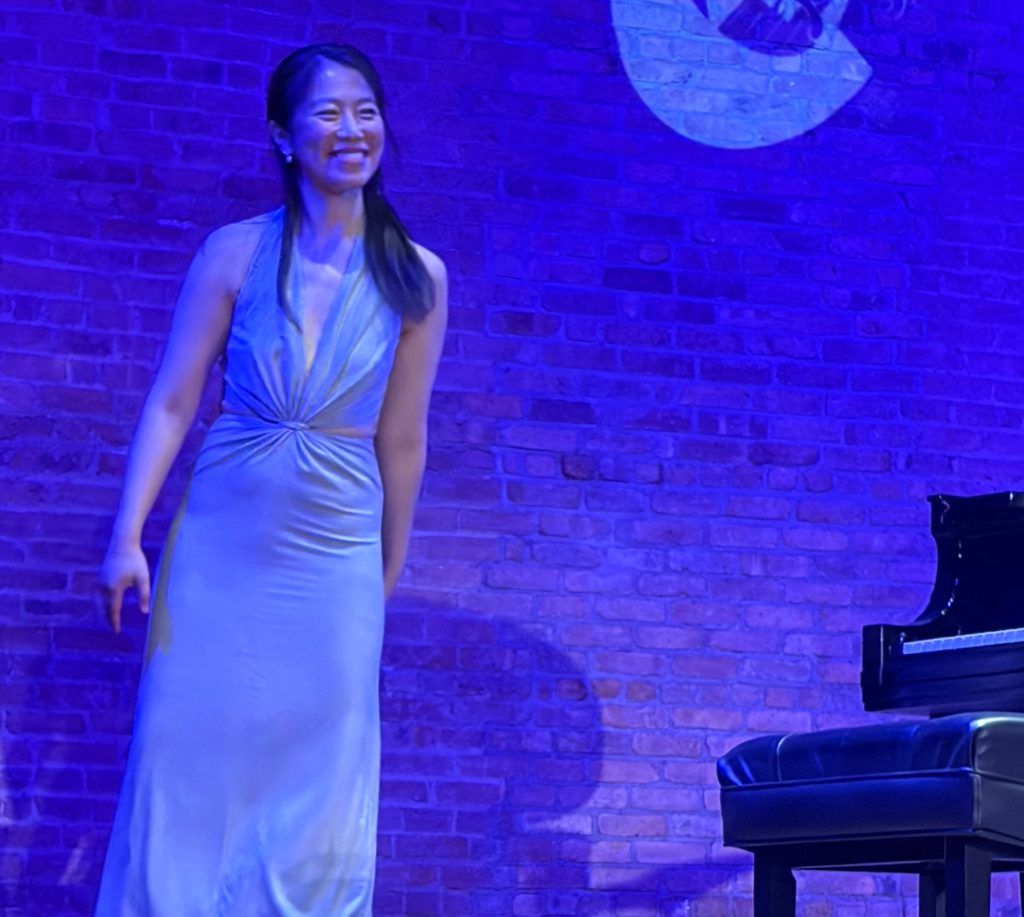
Last Saturday evening at The Stissing Center, pianist Sophia Zhou, clarinetist Graeme Steele Johnson, and tenor Daniel McGrew presented a delightful program of George Gershswin favorites.
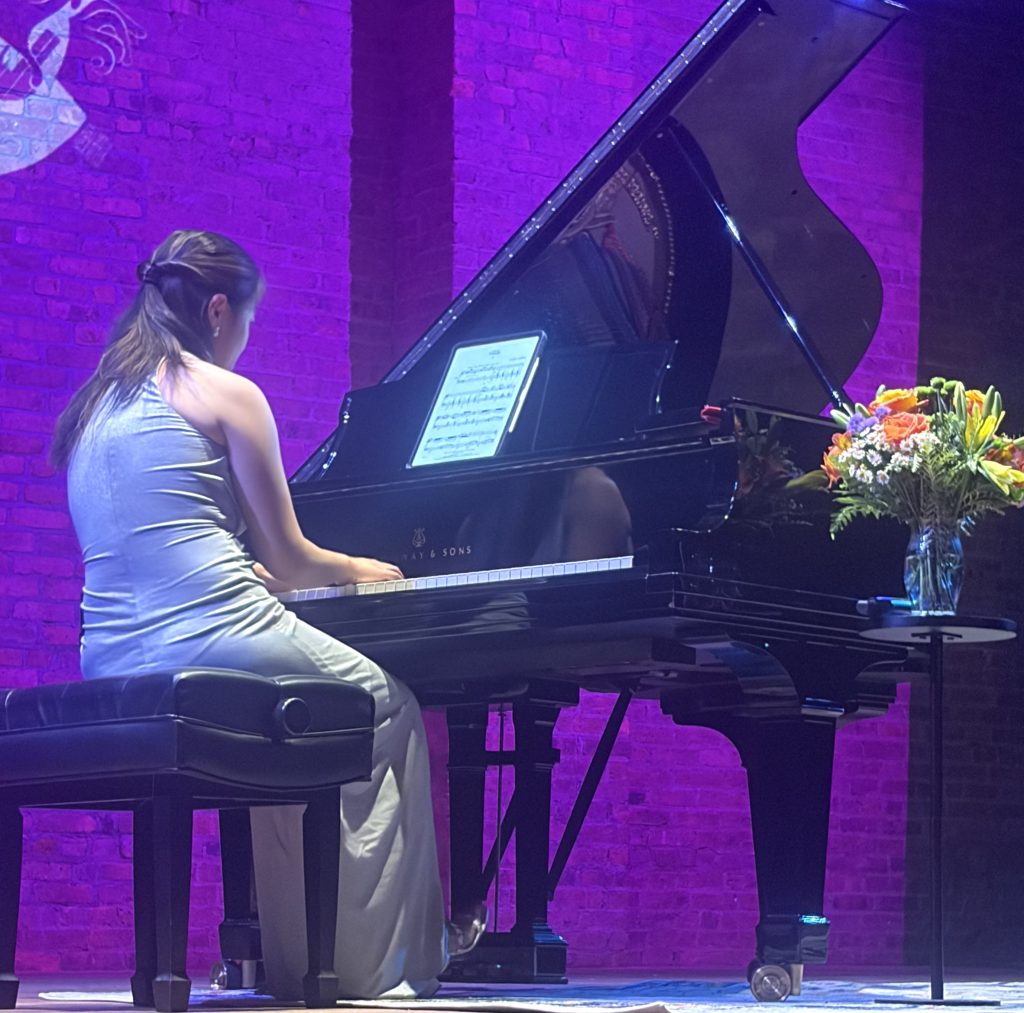
Sophia opened with the second and third Gershwin Preludes for piano. These three Preludes were first performed at the Roosevelt Hotel in Manhattan (1926). These Preludes displayed that jazz and classical music can combine in new formats. Gershwin imagined that he would compose a series of 24 such Preludes, calling them The Melting Pot, yet reduced the number to six, publishing only three.
The second Prelude appeared to be an affirmation of romantic love: the subdued melody of lower masculine keys being attracted go the higher right-hand keys with those keys charmingly confirming a knitted relationship where Sophia exuded remarkable emotional warmth. Gershwin called this piece “a blues lullaby,” so it may be depicting a father and newborn daughter.
The longer third Prelude in E-flat Minor was more ambitiously complex as it fused varied elements of jazz with classical music in a question-and-answer discussion of harmony. The lively jazz syncopation of the middle movement may resemble a rapid, enthusiastic conversation. In the third movement, E-major defeats E-minor, yet there is a touch of sadness in the triumph. Gershwin called the work “Spanish,” so it may be about the anticipation of a bullfight, the fight itself, and the death of the bull. Sophia played with arresting drama.
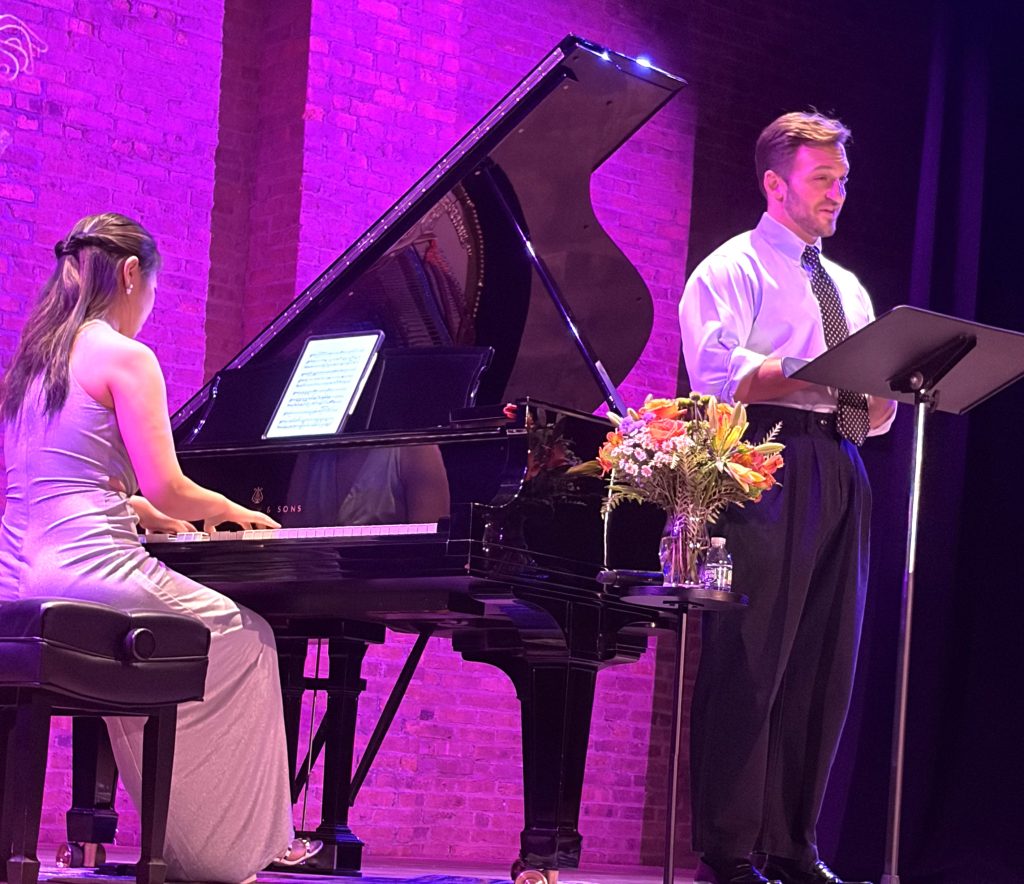
Tenor Daniel McGrew who has performed at the Kennedy Center and in various operas sang “Nice Work if You can get It” with amusing humor and “Our Love is here to Stay” with romantic finesse with Sophia on piano. Daniel is a master at sculpting the texture of words in a song, endowing lyrics with a warm ambient aura.
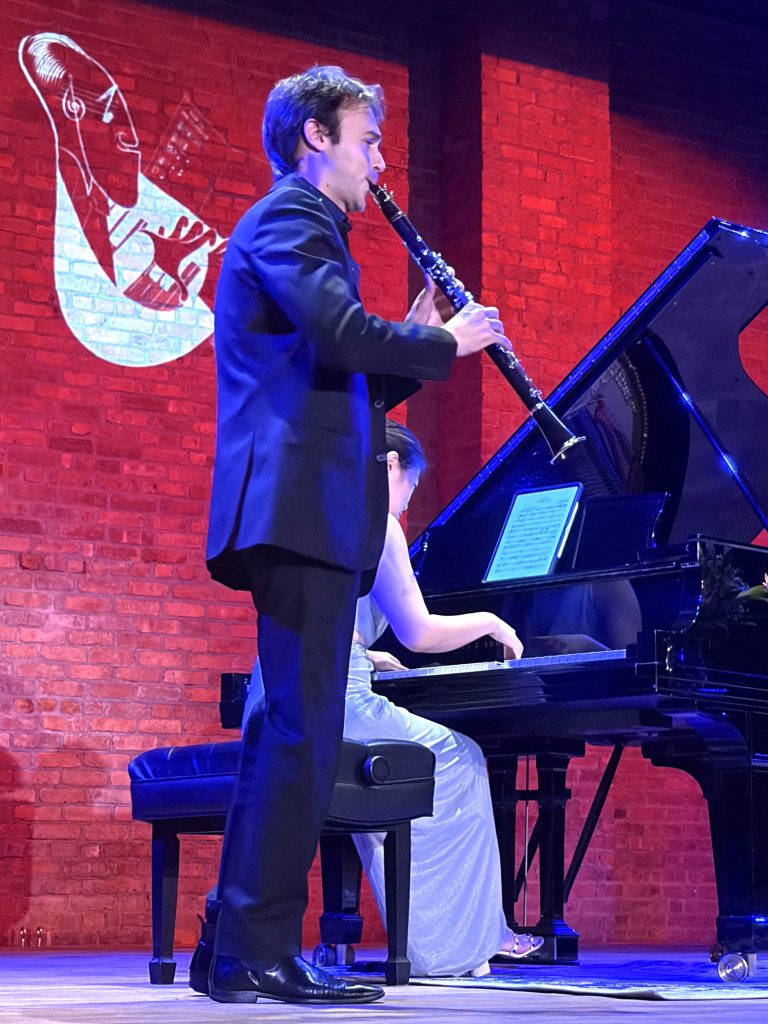
“The Man I Love” is a popular piano-singer song standard with lyrics by Ira Gershwin. Graeme Steele Johnson on clarinet, in an arrangement of his own, performed a solo version which may have explained why he fell in love with the clarinet, the instrument that is the closest to the human voice. He played with remarkable seductive resonance. He then performed Duke Ellington’s “The Single Petal of a Rose,” written for Queen Elizabeth and played in Johnson’s arrangement. This was a secret gift to the Queen whereby a single record of it was pressed and given to the Queen. The composition was discovered two years after the death of Ellington. This was a sincere and evanescent work sculpted by clarinet subtleties high and low.
McGrew re-appeared to sing “They can’t take that away from me.” The music is by George and the lyrics by Ira. The most famous version is probably the version recorded by Ella Fitzgerald and Louis Armstrong, yet with excellent piano backing by Zhou, McGrew delivered a convincingly nuanced version that was magnificent.
Gershwin’s Rhapsody in Blue (the title was by Ira) in the solo piano version was performed by Sophia Zhou with rapid finger intricacy that was astonishing. This 1924 work, written at the age of 25, was commissioned by the bandleader Paul Whiteman. The fusing of jazz and classical techniques was an astonishing advance that many classical reviewers attached, yet its propulsive energy remains an exciting experience. Most of the work was composed by Gershwin on a train ride from Manhattan to Boston, and it remains a popular piece when performed by a formidable pianist like Sophia Zhou.
Gershwin once said that he had more tunes in his head than he could write down in a lifetime. He died at the age of 39 from a brain tumor.
This was an exciting evening of sterling performers at the top of their craft, playing with voice and instruments in a night to remember!