by Kevin T McEneaney
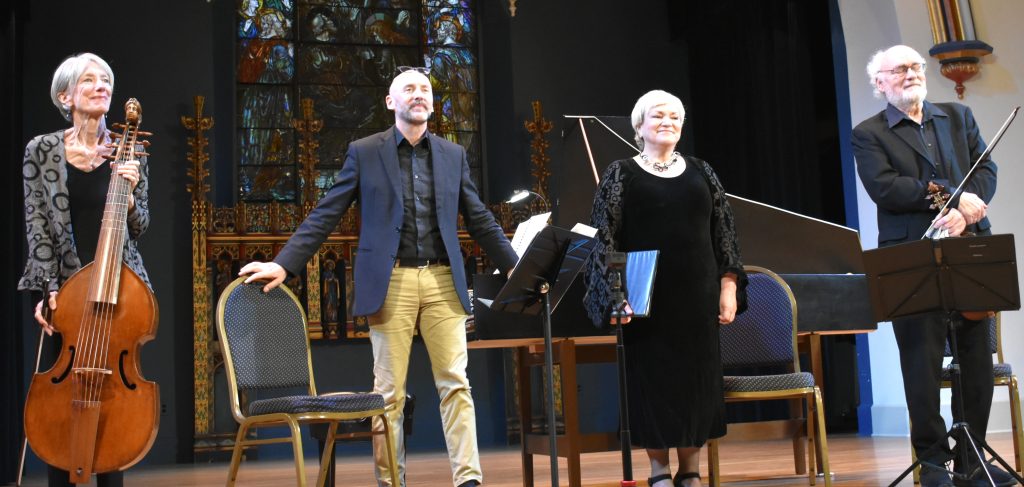
At Saint James Place in Great Barrington, last Saturday, Aston Magna, an organization devoted to the playing of period instruments, offered a program titled The Genius of the French Baroque. They opened with the most important French composer, Jean-Philippe Rameau (1683-1764), with Daniel Stepner on baroque violin, Laura Jeppesen on viola da gamba, and Michael Sponseller on harpsichord. Concert No. 5 (1727) featured musical portraits of Jean-Baptiste Forqueray, Marie-Anne Cupis (a celebrated dancer), and Roland Marais. Forqueray was a noted viola da gamba performer among French and German nobles; Jeppesen fronted the musical line with sonorous depth. Cupos was a celebrated dancer, and Stepner played with vigorous lilt with atmospheric ambiance from the harpsichord. Marais was a noted harpsichord performer, and Sponseller’s fingers flew across the keyboard with spontaneous vivacity.
Sonata Op. 5, No. 12 by Jean-Marie Leclair (1697-1764) was in two movements, Largo and Chaconne. Leclair was the most renowned violinist of his era and the father of the French violin style of playing, which produced a more empathetic sonority in the higher register. The lively Chaconne was my favorite part.
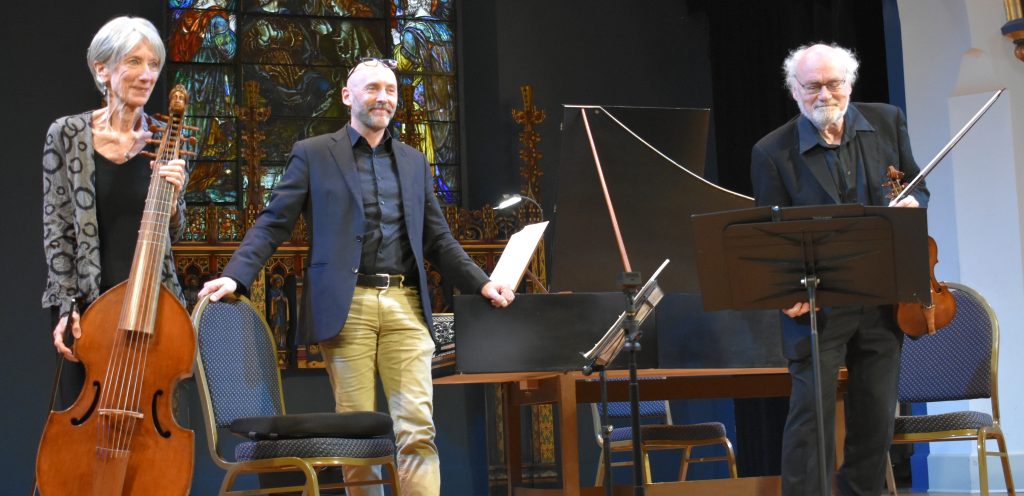
Cantata: L’amour, pique par une Abeille (Cupid stung by a bee) by Louis-Nicolas Clérambault (1676-1764) was a prolific composer and organist, although much of his work has been lost. Sponseller played solo with graceful fluidity in the higher more spiritual tonality than pianos ever achieved.
After the intermission, a composition by Elizabeth Jacquet de la Guerre (1676-1749) was performed; she was a noted harpsichordist and composer and was at the forefront of composing Cantatas for her era. She came from a family of harpsichord makers and performed for Louis XIV when she was five years old; she was the first woman opera composer. Jepperson on viola da gamba intersected with Sponseller with unified complexity.
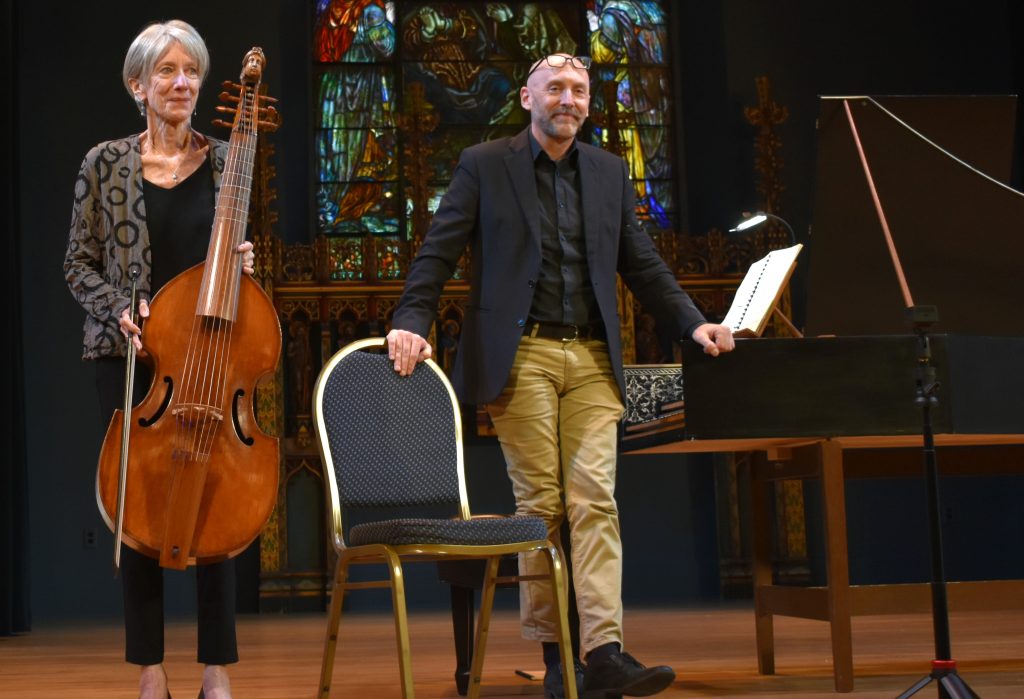
Tombeau de M. Lully by Marin Marais (1656-1729) by Jean-Baptiste Lully was played as a duo with harpsichord and viola da gamba, which brought out dramatic gravitas from Jeppesen’s jagged rhythms that left haunting memories in one’s mind that resonate as I write. Lully employed a huge staff that he pounded on the wooden stage floor to produce rhythmic cadence. He accidentally smashed his right foot while keeping rhythm. The foot became infected and the surgeon wanted to amputate, but Lully refused that procedure, which resulted in his death. And that is why King Louis XIV invented the slender baton in commemoration of Lully.
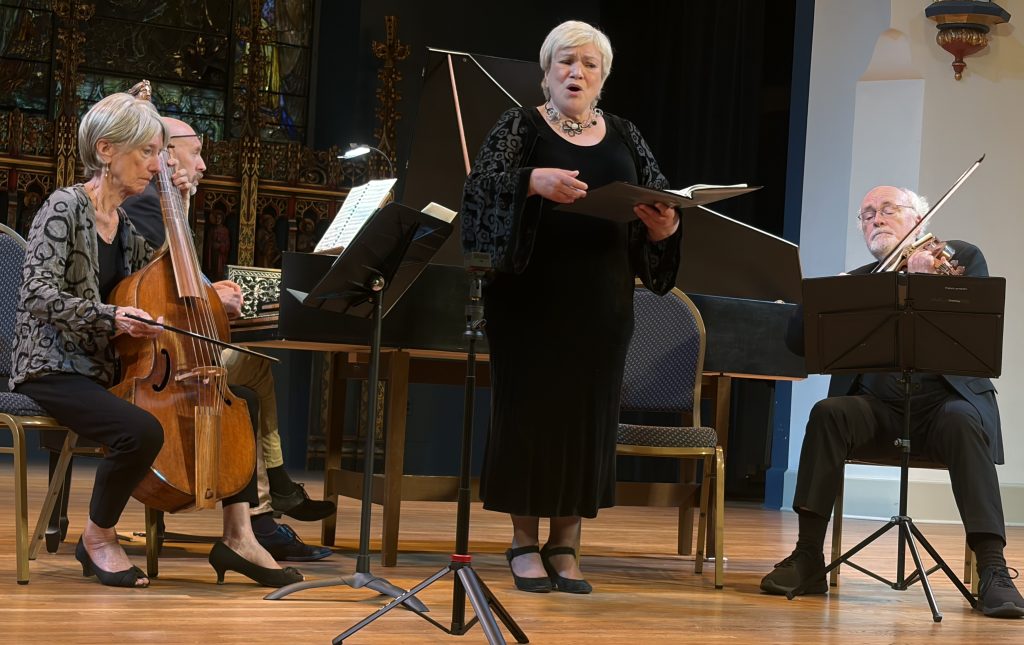
Opera Soprano Dominique Labelle joined for the next two compositions by Rameau: Entrance of the Muses, Zephyrs, Seasons, Hours, and the Arts and the Cantata Orphée. Labelle sang in articulate French with marvelous cadence and clear projection. The whole ensemble played with galvanized unity. Here was a vigorous, delightful sampling of French elegance in both words and music that offered a glimpse of romance, tragedy, and wistful meditation along with charming wit.
Jacques Lee Wood is the new Executive Director. Next Saturday at Saint James Place in Great Barrington, the Aston Magna Festival will feature Bach in Potsdam, Telemann in Paris at 3 pm. For information or tickets, call: 888-492-1283.