by Kevin T McEneaney
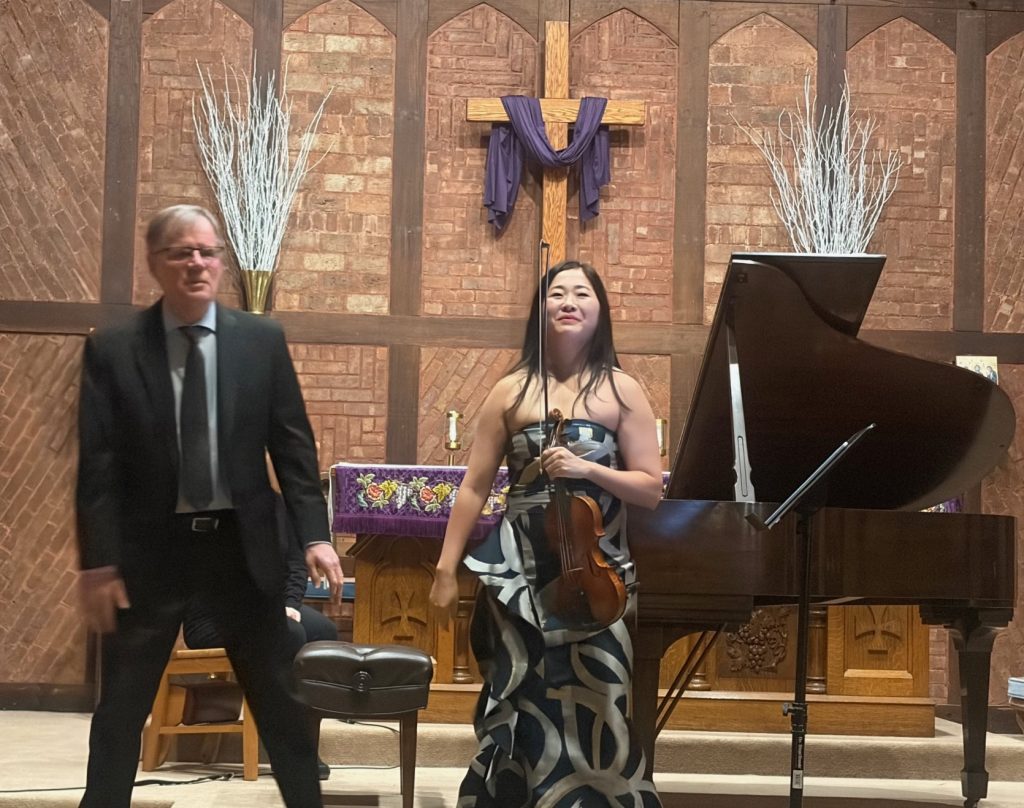
At Grace Church in Millbrook this past Sunday, the dynamic duo of Krisin Lee on violin and John Novacek on piano thrilled the audience with a dynamic presentation of both little-known and well-known musical offerings.
They opened with Southland Sketches (1916) by Harry Burleigh (1886-1949), regarded as the father of arrangements for African American spirituals. Harry often sang spirituals to Antonin Dvořák during the composition of his Symphony from the New World (1893) at his Manhattan digs. “Swing low sweet chariot” appears in that symphony. Southland Sketches offers an unusual combination of traditional African American rural motifs with a couple of Irish folk music violin tunes. This ambitious painterly canvas of rural life delivered hypnotic resonance, especially in the violin line which limned the countryside while the piano acclaimed the upper-class drawing room. I found this unfamiliar composition to be entrancing….
This was followed by non-poem IV by Jonathan Ragonese (b. 1989) which delivered frantic, kaleidoscopic, jazz-inflected saxophone-like lines that swirled with exciting inflection on violin while the piano went its jaunty way. This was classical music married to jazz with enthusiasm!
Four Airs: IV. Air (2000) by Kevin Puts (b. 1972) was lyrically robust with surprising shifts and turns with high-octane energy from both piano and violin, as if testing the boundaries of their instruments.
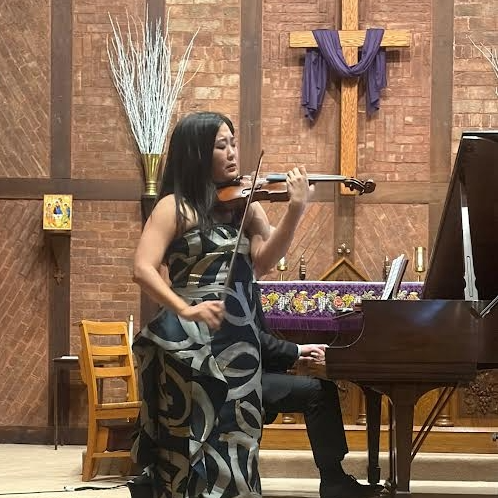
Violin Sonata No. 1 (1929) by Bohuslav Martinů (1890-1959) provided dazzling moments with fragmentary melodic elements as if the violin and piano were dueling in an undulating manner with Moravian motifs. Was this landscape or class conflict? Jazz snippets were employed to facilitate melodic transitions. Martinů had encountered jazz in his visit to Paris and would often use jazz motifs to push forward continuously evolving musical motifs with chameleon-like finesse. The violin line was a transcendent chariot to a new, breathtaking world!
The second half of the concert focused on American popular music, opening with But Not for Me (1930) by George Gershwin (1898-1937), one of the few great Gershwin tunes that Louis Armstrong failed to record, yet Ella Fitzgerald famously nailed it. This romantic tune is often performed by orchestra, as well as piano and mellow saxophone, yet here in this new arrangement, the vigorous violin dominated with emphatic authority to achieve affirmative rejection of a contemplated romance.
Lament (1954) by James Louis Johnson (1924-2001) is most often played by a horn and piano. Here Lee’s violin melted with tenderness and effective recollection that offered striking contrast to the program.
John Novacek is noted for his obsession with Scott Joplin’s (1868-1917) ragtime tunes. The Entertainer (1902) is perhaps his most famous rag, partly because it appeared in the Newman and Redford film by that name and the composition was the repeating theme in the film. The unforgettable melody of the work remains haunting. This arrangement with violin was more effective than I might have imagined as it intersected with the piano with affirmative zest.
At the first performance of Romance for Violin and Piano, Op. 23 (1893) by Amy Beach at the Women’s Musical Congress in Chicago with Beach on piano and Maud Powell on violin, the audience demanded an encore. According to Beach, the composition is based upon the song “Sweetheart, Sigh No More,” yet no one has ever been able to make the slightest connection between the composition and the song, here played with deep emotional appeal by Lee and Novacek as they melded in formidable unison.
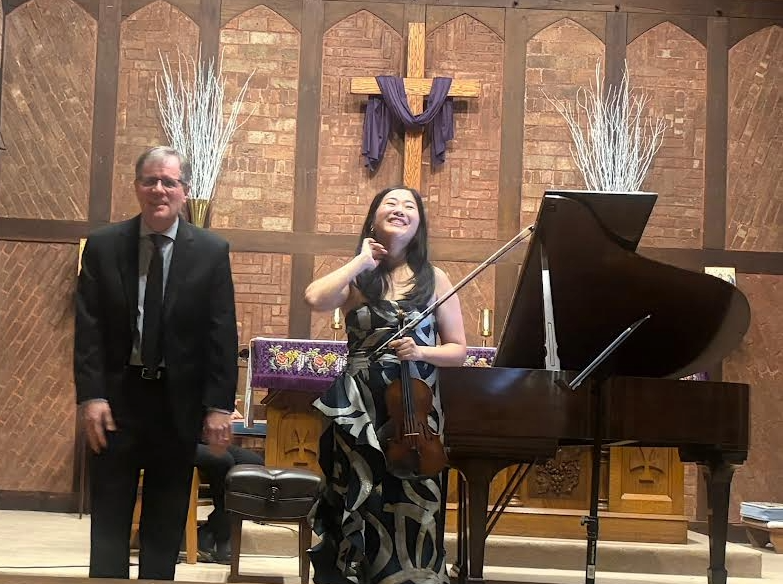
They concluded with four delightful rags composed by Novacek. The first and fourth were my favorites. Rhythmic piano drive was amplified by fierce violin accompaniment.
While the amazing concert appeared to be over, the duo emerged to play an encore based on the Gershwin theme of Porgy and Bess. This was the most incredible encore I have ever heard. It lasted for about fifteen minutes!
This program will be repeated at Carnegie Hall next weekend.