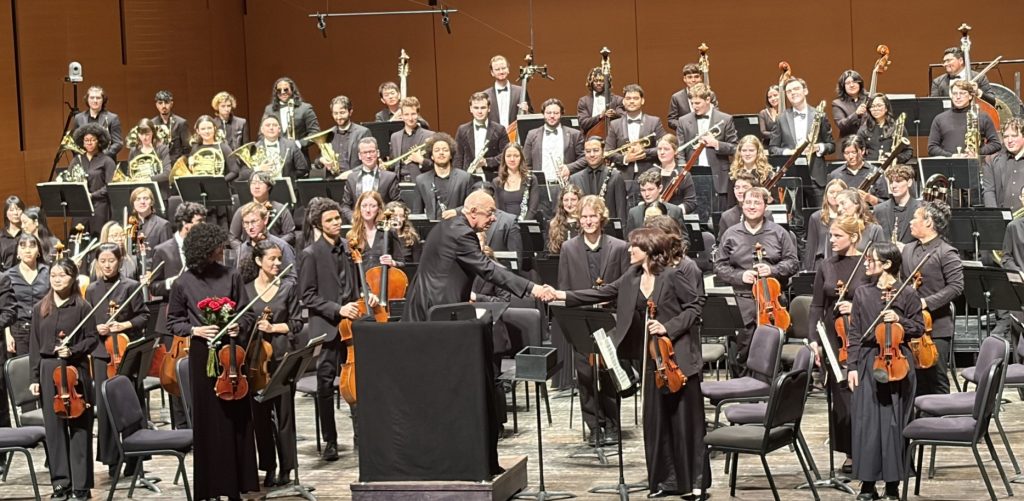
Last Saturday night at Sosnoff Theater, The Bard Conservatory Orchestra under the baton of Dr. Leon Botstein opened with Hymne á la Justice, Op. 14 (1903) by Albert Magnard, a short symphony inspired by the infamous Dreyfus affair, an antisemitic conspiracy denounced by Emile Zola and Magnard, who resigned from the army and turned to music, composing a symphony which began with shock, modulated into investigation, concluding with sorrow and national shame. This was a lively and worthy work, rarely performed. The choir of bass players under Moises Arteaga was magnificently thrilling. Sayi Chen on the harp provided heightened emotion. Lev Estevez and Lucian Maisey on trombone were sharply impressive. The orchestra played with tight clarity and impressive feeling.
Lively contrasting humor followed: L’Apprent sorcier (1897) by Paul Dukas, known more broadly as a masterpiece, Disney cartoon offered light-hearted ambiance that sparkled with childlike wit. To hear this twelve-minute composition from a top-tier orchestra stamps a smile on the face of every attendee. The music is based upon a comic ballad by Goethe. This mini-symphony offers an anthology of prankish sounds as if the orchestra was unravelling in chaotic disarray and the magician conductor must grasp and collect all the instruments which have been misbehaving. The woodwinds were delicious, and Anna White’s bright prank piccolo carried ironic resonance. Sometimes a little silliness and havoc can go a long way….
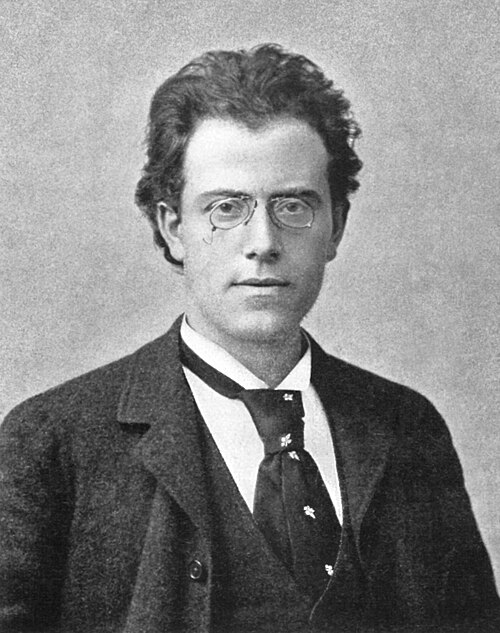
Gustav Mahler’s first masterpiece, Symphony No. 1, sometimes referred to as “Titan,” carries a sobriquet born in the second performance. That nickname was to honor the splendid German novelist Jean Paul, as well as indicate the gigantism of Mahler’s exploding aesthetics.
Early performances of this work were not well-received due to antisemitism, Mahler’s birth being in Bohemia, plus the conventional prejudice against exciting innovation, since this work was not in the mold of either Brahms or Wagner. The English composer Benjamin Britten boldly revived the work and established this symphony in orchestral repertoire, although it remains rarely performed, so this was a superb Spring treat.
The symphony opens with a musical description of nature, beginning with Spring dawn. A clarinet fanfare (the instrument closest to the human voice), superbly executed by Mohammad AbdNikfarjam, delivered the awakening call to Spring with its stimulating light and delicate showers, then a trumpet fanfare by Ruiz Araujo announced the wondrous growth of vegetation, followed by the mellow blooming of buds and flowers translated into sound.
This symphony is an exuberant allegorical journey through landscape and folklore as it employs motifs from German songs that endow the work with sudden irregular shifts and inventive color. The soundscape is marvelous. Mahler eschewed refrain recapitulation, and those addicted to repetition are often confused. The boisterous conclusion of the first movement is apparently the parodic echo of Beethoven’s laughter running off as a vanishing enigma.
The second movement offers country folk dance winding down into satiric decline with stopped horns and restless winds pushing ever forward into confusion, then the dance motif goes into correction mode, evolving into reconstruction, purged of vulgarities, with saving corrections by the cellos who redeem the dance motif.
The third movement was intensely controversial. The “Hunter’s Funeral Procession,” a comic theme depicting the passage of a woodsman’s coffin carried through the woods by a retinue of various animals in a processional parade to the burial ground, here. This was a comic theme in German paintings and conversational folklore, here set to the amusing tune of “Frère Jacques” with a tattoo of oboes underpinning the music. The animal procession diminishes into the distance, and an amateur village band asserts itself as an immortal folk-memory of the town’s obscure history. An orchestral thunderclap dispenses the band.
In the final fourth movement, triplets in the winds contend with bass and evolve into a ferocious, menacing march. Timpani rolls superbly played by João Melo compete with grinding cellos, which revert to introducing the initial first movement. Horns happily join in. The return to the first movement turns climatically thunderous, as if peasant folklore exists as a closed circle of apocalyptic eternal return, invoking a musical picture of a wealthy, rigidly bound class society. The final despairing climax belonged to the bass, violins, violas, and cellos!
Since the symphony carried such a strong social critique, it was ignored by those who were the comfortable owners of society, those who close their eyes to social aristocratic stasis that promotes preposterous mythos to disguise corruption.
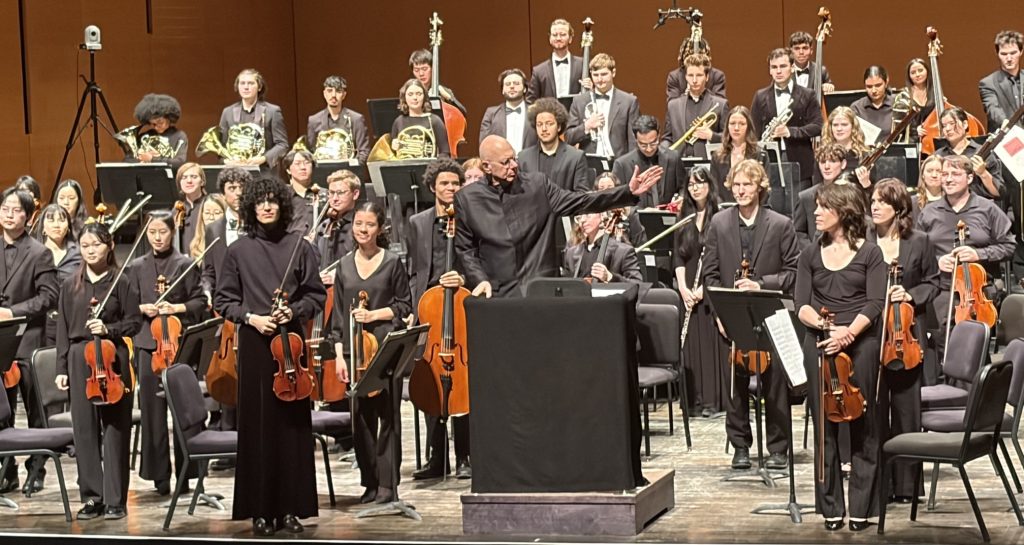
The Orchestra Now played with such trenchant passion that it transcended its own sterling reputation. Those performers who were graduating this semester stood for a special round of applause. The theme of this first symphony by Mahler freighted trenchant contemporary allegory.
Bard’s two-week Summerscape program this coming August will focus on Wolfgang Amadeus Mozart.