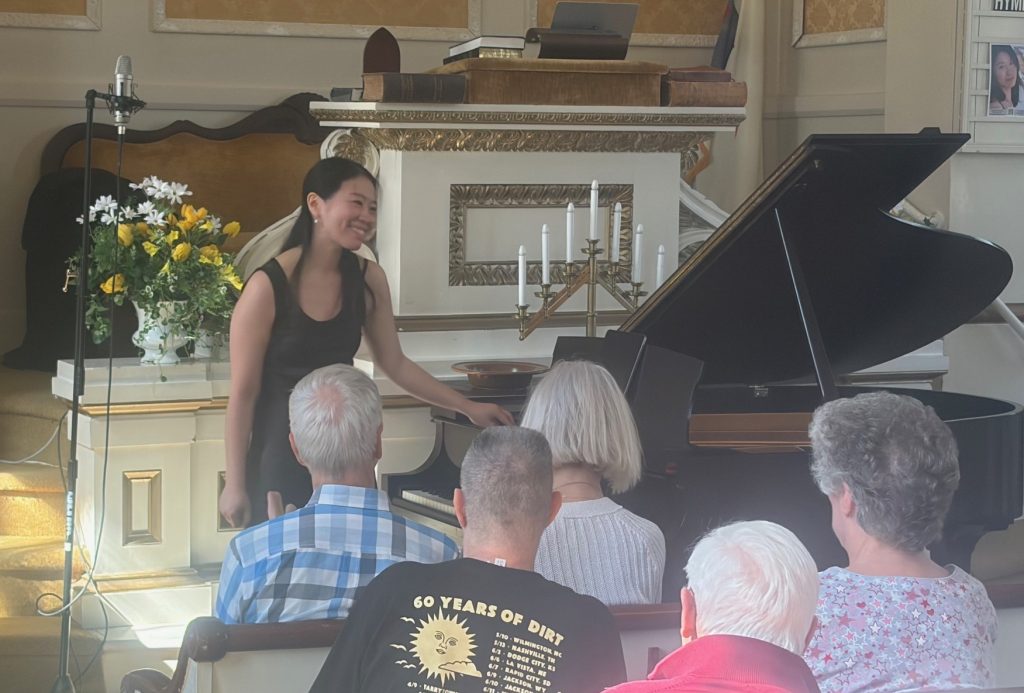
Sophia Zhou, soloist and chamber musician, performed a solo concert last Sunday afternoon at Smithfield Church in Amenia, an old venue with excellent acoustics. She has performed at Carnegie Weil Concert Hall and the Kennedy Centre in Washington, D.C., now closed due to artistic cancellations, major layoffs, and a lack of donor renewal support. Abroad, she has performed at the Royal Concertgebouw in Amsterdam, National Library of Catalonia, and Shanghai Concert Hall.
As the winner of the V BPA International Piano Award of Barcelona, Ms. Zhou was engaged for solo recital tours across Spain. As an avid chamber musician, she has collaborated with members of the Berlin Philharmonic Orchestra, the New York Philharmonic, the Metropolitan Opera House, HK Philharmonic Orchestra, and the Shanghai Symphony Orchestra.
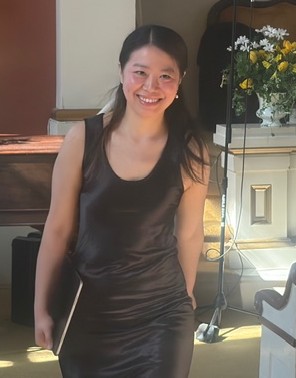
Sophia opened with Fantasia in D minor, K. 397 by Wolfgang Amadeus Mozart, written in Vienna during the 1870’s. Mozart rarely composed in D minor, and the incomplete work may have been one of his sudden, impulsive inspirations that he never completed for lack of a specific venue. Sophia embodied the spirit of Mozart, the gifted composer, whose fingers could invent quicker than he could think. Here, the piano rapidly leans toward operettic emotional intonation with great passion, which Sophia captured with a feeling of spontaneous improvisatory finesse while conjuring intense passion!
Two Mazurkas, Op. 59 No. 1 in A minor and No. 2 in A-flat major (1833) by Frédéric Chopin followed. Mazurka is a triple meter folk dance with the accent falling, variously amusing, on the second or third beat with improvisational inflection and humor. The popularity of this ballroom dance outside of Poland was precipitated by the fame of Chopin’s mazurka piano music. The dance was popular in the mid-northwest plain of Poland and was of bagpipe origin during the sixteenth century. Chopin wrote fifty-nine mazurkas, introducing both counterpoint and fugues into the dance while exalting the immediacy of Romantic passion. In the mid-to-late nineteenth century, the mazurka was the most popular dance in both Europe and the United States.
Sophia played these lively, breathless pieces with improvisatory ambiance, eliciting humor and a rush of Romantic passion.
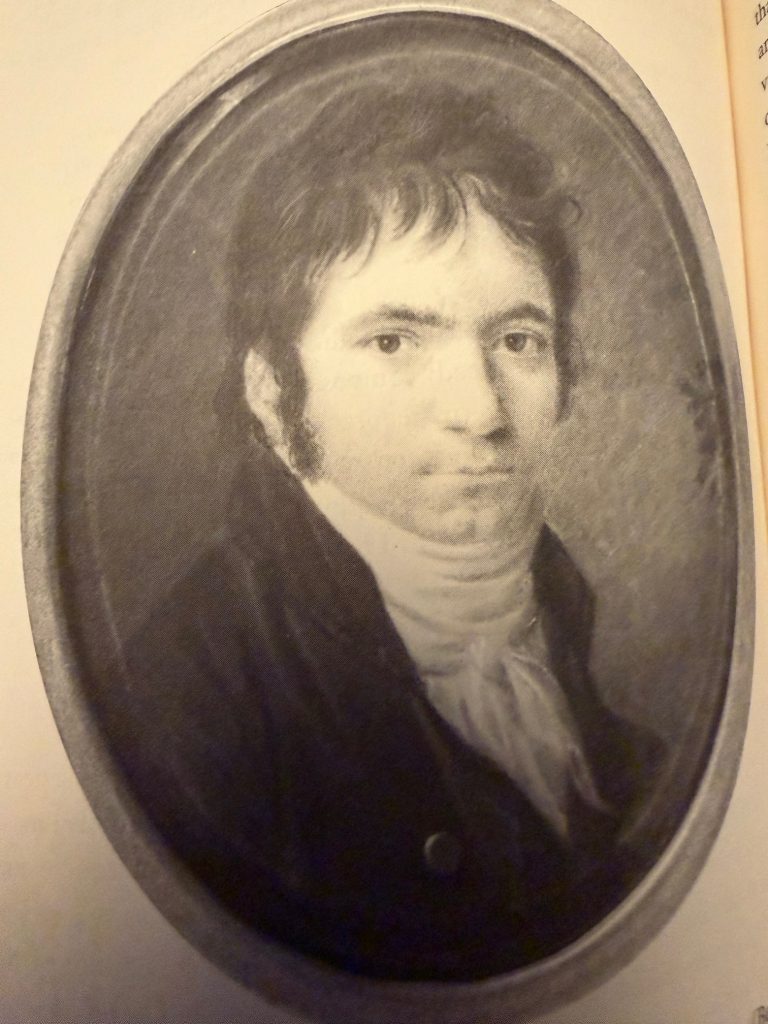
The climax of the concert was Piano Sonata No. 21 in C major, Op. 53 (1804) nicknamed “Wildenstein.” In 1803 Beethoven became extremely ill, accompanied by growing deafness, suffering from earaches and painful ringing in his ears. Fear and depression set in, yet he heroically made a breakthrough with inspiration on his new French Érard piano that featured an extended range with the first foot pedal, which encouraged pedal effects and led him to discover new colors and textures.
At that time, C major was employed for military pomp and not for passionate emotion which he invented as a new language for C major, whereby power and energy do not dissipate. Zhou gave impressive resonance to the darker keys in E-flat, which delivered both emotional and physical disorientation.
In the middle movement Zhou delivered a strikingly haunting short slow movement in F major that turned my brain into a mysterious pinwheel. This middle movement was inward, a personal confession of his fear of hearing loss, and Zhou registered this with moving plangent affection.
The explosive rondo of the third movement was played with climatic eruption: of anger, ecstatic hope, and a waterfall roaring crescendo that shook the bottom of my spine. Here the ceiling was gone as Zhou ascended into a newly invented language of artistic ecstasy which would flood the musical landscape over an expanding century or two, affecting how we understood the elements of music. Zhou captured the ecstatic hope of music as a healing agent amid tremendous stress in a public confession of Beethoven’s apocalyptic sense of the brevity of time. The audience gave a standing ovation of serious length.
Everyone present experienced inexplicable dynamic disequilibrium amid triumph with ecstatic deliverance! Everyone needed to take deep breaths, as if the audience were a single organism.
Once everyone caught their breath, Sophia performed L’Isle Joyeuse (1904) by Claude Debussy, which celebrates the island of Jersey during a two-month summer stay. This confident, extroverted work displays the assurance of an extrovert, a welcome contrast to the Beethoven.
Here in July, we have a starry night sky, strolls on the windy beach, sumptuous flower gardens, sunlit languor with chilled white wine and excellent food, and a romance with Emma Bardac, the lover of Gabriel Fauré, which would result in the breakup of two marriages as they later married each other.
Sophia brought out the mystical tenderness and calm optimism in the union of the lovers. The accessible, quiet delight of the composition concluded with an almost mystical exuberance in the joys of seaside strolls, with lithe, crashing waves, to discover a memory of joy recollected.