by Kevin T McEneaney
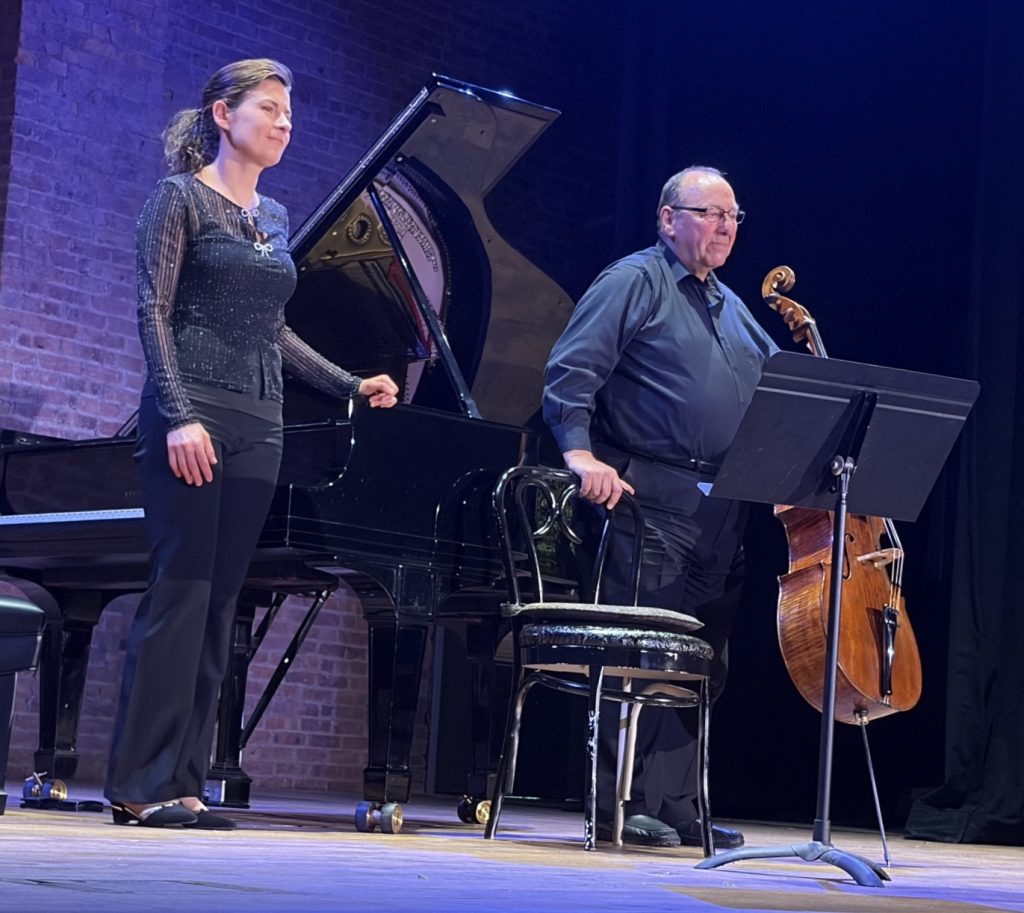
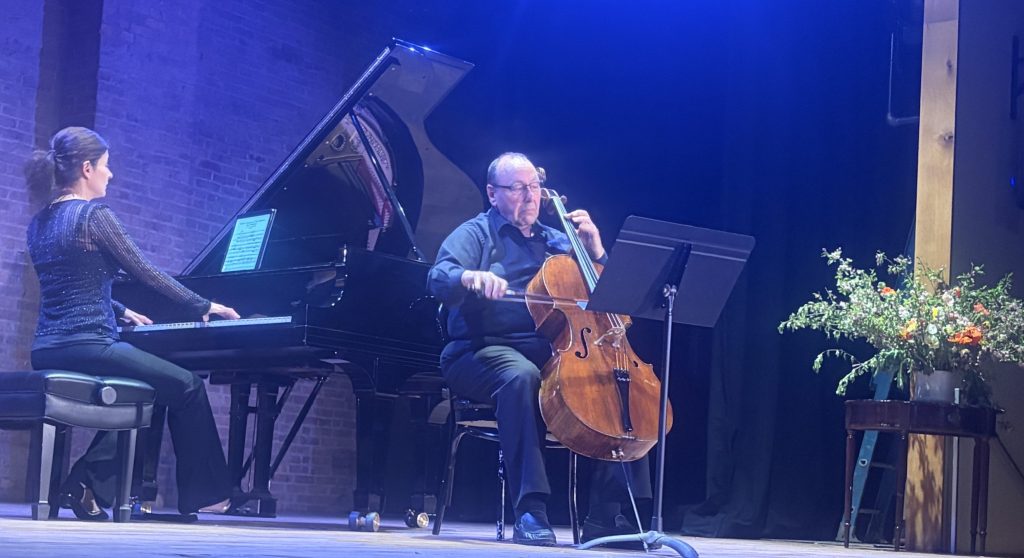
Last Sunday at the Stissing House in Pine Plains, cellist Peter Wiley from Bard College teamed up with Russian-born pianist Anna Polonsky from Vassar College to provide an exciting duo program of Beethoven, Schubert, and Rachmaninoff.
They opened with Beethoven’s 12 Variations on “Ein Mädchen oder Weibchen,” Op.66 (1796), which are witty variations of the Papageno theme in Mozart’s The Magic Flute. Abbé Gelinek, a popular piano teacher in Vienna, composed a set of six “frivolous piano variations” three years earlier. While Gelinek’s variations were popular and pleasing, Beethoven decided to overgo Gelinek with more adventurous and ambitious innovations by inventing unconventional probing asides.
The piano opens with a peppy ambiance, as the cello fraternally agrees. When they move forward, both instruments wander in their own path. They begin to express themselves in mutual dialogue. The cello decides that it wants to lead and does, yet in the tenth movement, they fuse as a duet, harmonizing together and questioning where they are going with their harmonies. A tentative agreement appears in the eleventh movement, then a happy marriage triumphantly provides an exciting concluding climax! Papageno has found a wife! While this may seem a bit silly, it is great fun, and it puts a smile on everyone’s face.
Moravian Franz Schubert’s Arpeggione Sonata, D. 821 followed. The nickname for this composition was borrowed from the arpeggione, a bowed guitar-violincello, which no longer exists. Schubert likely wrote the sonata for J.G. Staufer, who invented the strange instrument. Cellists remain obsessed with this composition. Yo-Yo Ma was obsessed with this strange work since the age of twelve. He recorded it on the Sony label, yet one experiences a better version by hearing Peter Wiley play it live. The composition is quite difficult to play, which is why all great cellists want to play the definitive version.
In 1824 Schubert was “at sea” without success, and he returned to Vienna, lodging not in the city but in his old schoolhouse room at Rossau. Things were not going well for him when he returned in mid-October. He composed this work in November. He was suffering from gastritis and was drinking too much, wandering from bar to bar. What we hear is a multi-ethnic repertoire of Moravian, Silesian, German, Hungarian, and Jewish tunes from the various venues visited. The advertising angle of the composition was to show that the instrument could accommodate all the various folkloric styles. These melodies became more interesting in Schubert’s wandering arrangements. The cello dramatically leads around every bend with acrobatic sonorities and emphasis. Polonsky was intense, while Wiley was transcendent, especially in the lower register!
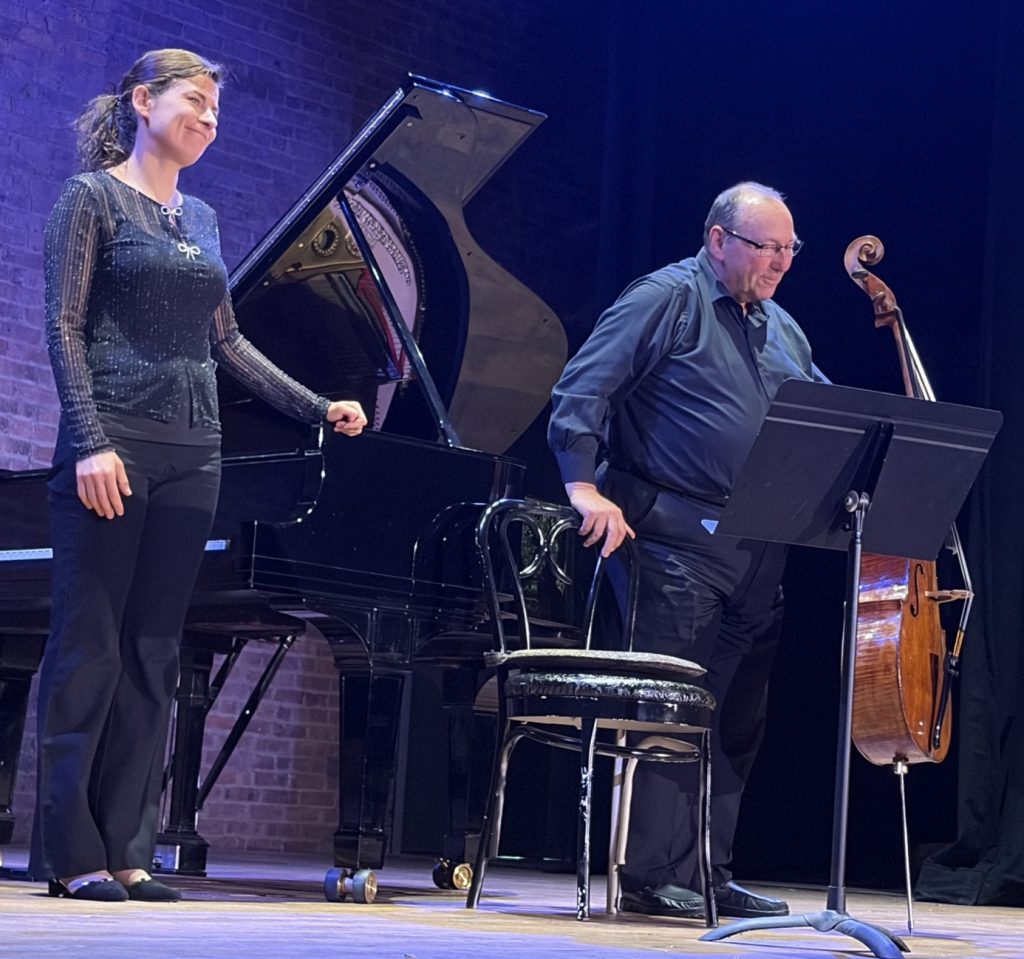
After the intermission, Polonsky and Wiley performed Sergey Rachmaninoff’s Sonata for cello and piano in G minor, Op. 19 (1901). Rachmaninoff was a pianist and considered the piano and cello had equal roles in the work, yet the piano introduces the dominant motifs. He dedicated the composition to his cellist friend Anatoly Brandukov, and they performed it together in Moscow in December; it was an astounding and lasting success.
The first two opening notes ask Why? This motif runs throughout this one-hour composition. The virtuosity piano introduces sumptuous themes, and the cello embellishes them. There are over two dozen available recordings, not counting Russian recordings.
The opening Allegro moderato is the longest movement, with the piano delivering ardent themes. In the second movement, the cello has a terrific pizzicato theme. Melodic and rhythmic lines crash and converge in the third movement. The final fourth movement features a pianistic conjuration of Moscow church bells by the piano with Polonsky feverishly playing keys cross-handedly. The intense pace remains swiftly amazing and breathtaking. One cannot wrap one’s mind around the work with a single performance. My mind is still echoing and reeling! Astonishingly, a performance of this caliber can be found in Pine Plains….