by Kevin T McEneaney
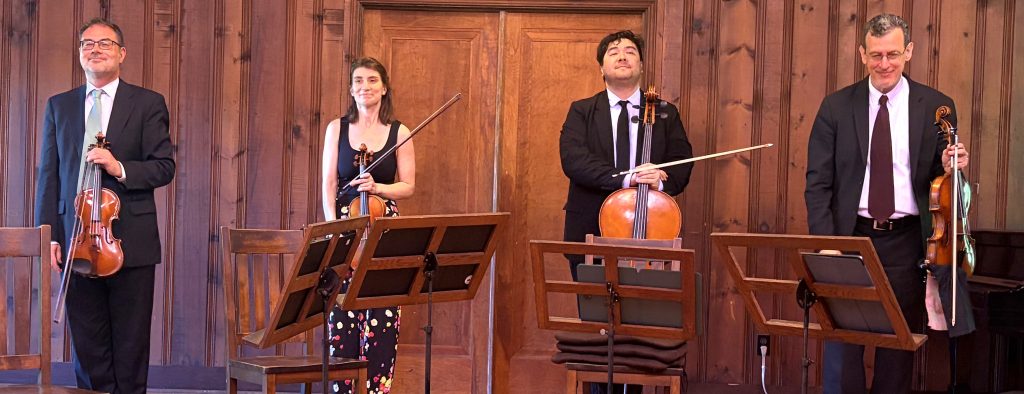
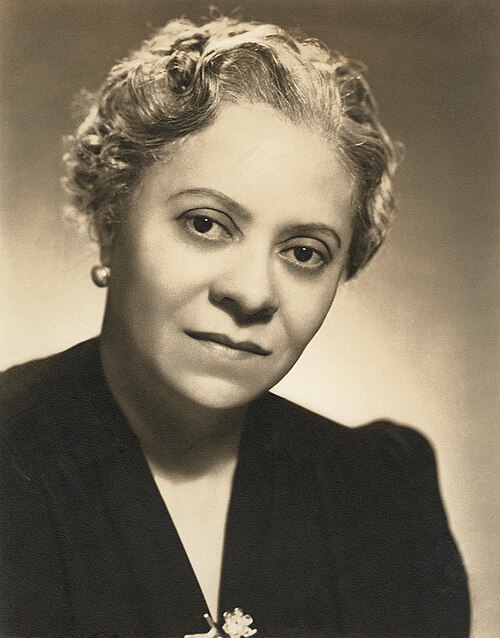
The Euclid Quartet from Ohio opened with String Quartet No. 1 in G Major (1929) by Florence Beatrice Price under sunny skies with scudding cloud puffballs. Florence was born in Little Rock to the only African American dentist in the city. Her mother was a music teacher, and she began playing the piano at four years old. Her first symphony was produced in Chicago in 1924. She wrote over three hundred compositions. Her work is currently undergoing a substantial revival.
First violinist Aviva Hakanoglu led with sweet high notes in this work redolent with nostalgia for her youth. On viola Luis Enrique Vargas guided wanderings through forests, plains, silvery brooks and robust streams. Justin Goldsmith on cello underlined sunsets with wistful memories. On second violin Jameson Cooper evoked rural sunrise. This ardent, wandering walk through redolent landscape delivered a marvelous painting of rustic life through the eyes of an empathetic child who was a close observer of nature’s glorious vagaries. The ambience of the composition still rings in my ears as I write. This was the first performance of this striking gem at Music Mountain.
String Quartet No. 1 (2000) by Roberrt Paterson provided a marked contrast. Jameson Cooper from England on first violin led the Quartet in a rollicking satiric landscape. The opening movement, Fast and Sprightly, whimsically blends classical style with jazz motifs in the manner of George Gershwin, yet with an ambiance quite different from Gershwin. Janacek’s style is transformed into nightclub jazz. The second movement, Logy, satirizes country waltzes as something that suffocated the young musician’s precocious, aesthetic sensibilities. Cooper’s lead violin began to screech with Aviva’s violin, mocking the discordant blare of Andrew Lloyd Weber’s music, a perspective that I heartily agreed with. As a young precocious musician, Paterson obviously felt out of place with pop culture.
The third movement, Sad, Lucious Adagio, features a cello solo by Justin that was memorably robust with double-stops while the second violin and viola solos offer contrasting remedies with lyric response, while the fourth movement, Energetic Polka, delivers more satire on the dance as it bends and blends the theme song from the TV series The Love Boat, which was based upon a novel by Geraldine Loretta Saunders (1923-2019) who, in a book store, once enthusiastically invited me to her posh hotel room in Manhattan for a glass of wine, but I declined.
Paterson is a jaunty, inventive satirist of pop culture, yet it is not the kind of music that one remembers for a lifetime.
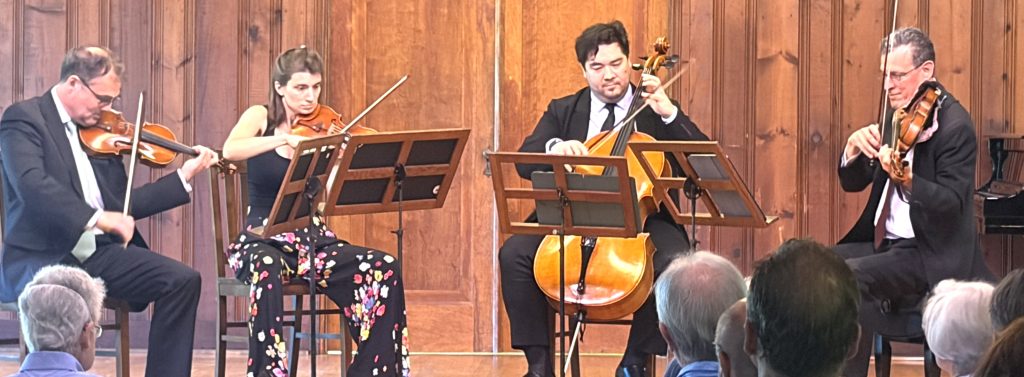
String Quartet in B-Flat Major, Op. 67 by Johannes Brahms offered bucolic summer contrast inspired by Brahms’ favorite folk tunes with expert fiddling by violinists Jameson and Aviva, who floated shifting accents with aesthetic echo in the opening scherzo-like Vivace that sounds like an appreciative nod to Antonín Dvořák’s Bohemian rhythms.
In the following Andante, there are some delightful echoes of Robert Schumann’s second symphony where Justin’s cello was superb. In a letter to Clara, Brahms wrote that “only a German can compose, for only his deeply serious eye can still look forth full of love amidst great suffering.” The sufferings were the last years of Robert’s life and Brahms’ unrequited love for Clara, his faithful muse, who remained merely his closest friend.
The third movement, Agitato, appears to describe the final, gruesome asylum days of Robert Schumann, along with the current stifled passion of the composer. The Finale is a treasure trove of surprises, with a roving tonality related to the opening of Vivace. Jameson was incandescent in the final movement.
Brahms once described this movement as the most amorous, affectionate thing I have ever written. The final Coda suggests that he still entertained the distant hope of marrying Clara….
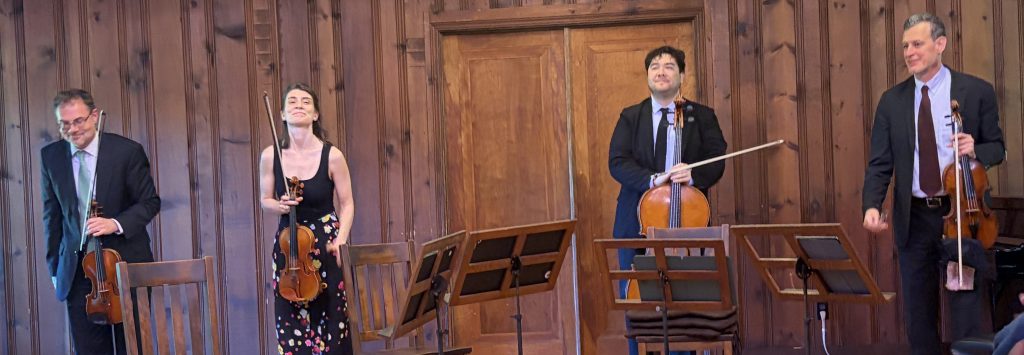
The audience stood clapping for a long time and the Quartet emerged for a second bow.