by Kevin T McEneaney
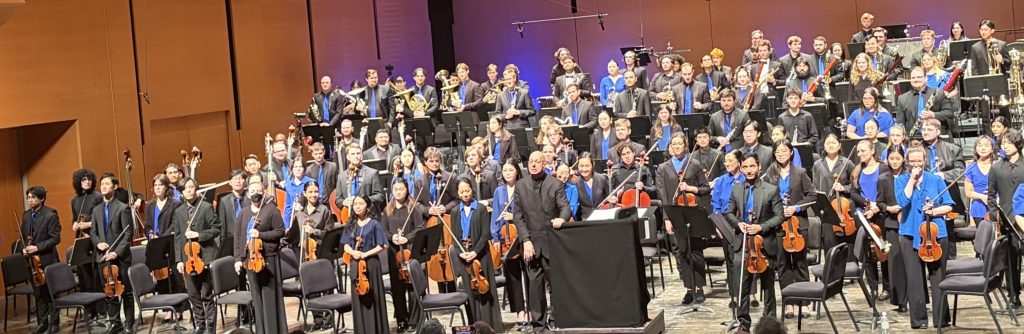
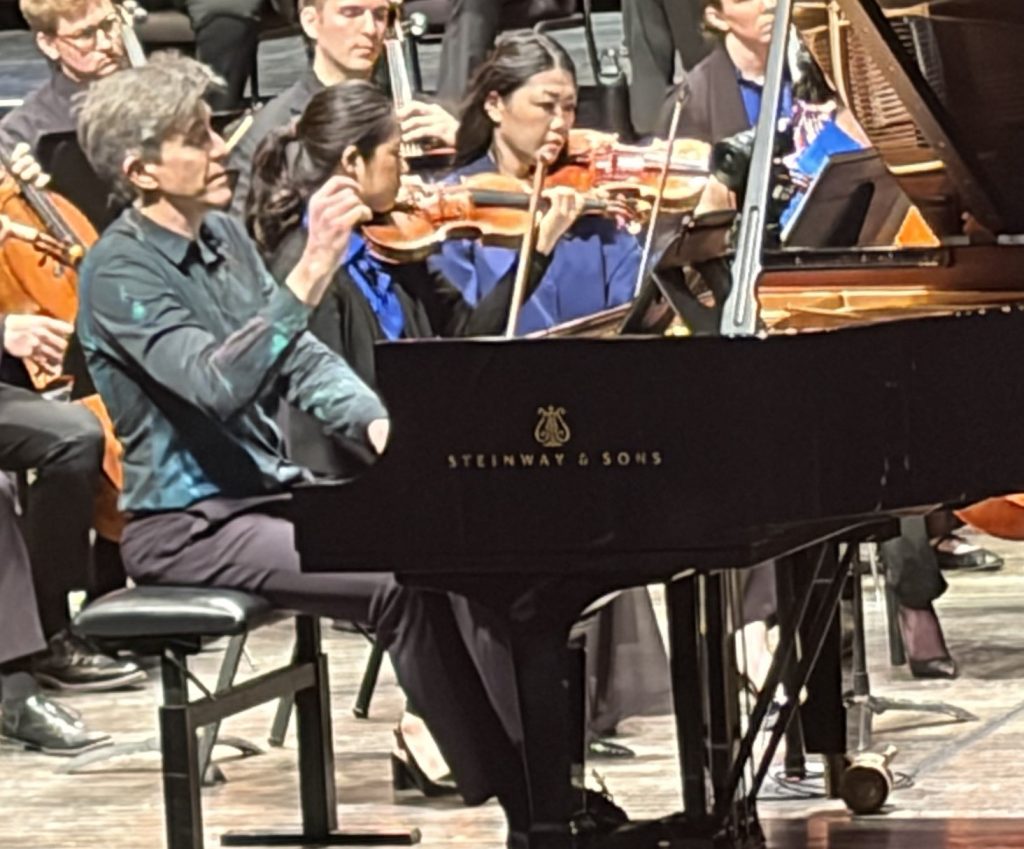
Richard Strauss began composing at the age of nine. At the age of 21, he composed a Serenade and a Burleske in D minor (1886, revised in 1889), written for the conductor Hans Bülow, who rejected the work as unplayable. Strauss was an anti-Wagnerian and was deeply influenced by Brahms and Liszt, yet he projected his own perspective with unusual (often startling) combinations of interactions between the lead piano and orchestra conducted by Dr. Leon Botstein. Blair McMillen played the piano with emphatic flair and intense, elegant finesse.
The composition is brilliant, awkward, unconventional, arresting, and ambitious. The surprising opening with expert timpani by Pei Hsien (Ariel) Lu makes one sit up straight in one’s seat! The piano begins a dialogue with the orchestra with surprising twists and emphatic turns. The piano knows where it is going, while the orchestra posits questions. This work is impressive, yet not coherently clear, as the piano earns its approbation from the orchestra.
Written at the age of 64, Die Tageszeiten (Times of the Day, 1928) was accompanied by members of The Bard Festival Chorale under the direction of James Bagwell. In four parts (morning, afternoon, evening, and night) this hymn to nature characterizes the psychological ambiance of a single day. The Chorus opens with an announcement of glorious dawn and anticipation of a day as the orchestra limens a description of light and anticipation. A midday rest is dramatized with approbation. Evening was most satisfactory with the gradual retreat of the orchestra, a liquid aesthetic that I heartily admired as the strings grew ever mellow into a whisper. Night was most mysterious, a dreamworld where anything was possible as mellow orchestration conjured seductive, inquisitive possibilities. I thought the last two movements with mellow horns and Olvia Chaikin’s flute to be exquisite masterpieces!
Bass player Zacherie Small delivered an eloquent and amusing introduction to Richard Strauss’An Alpine Symphony (1915), noting that someone physically fit might face a five-and-a-half-hour ascent and three-hour descent with a bit of luck from good weather. The symphony opens with sinking minor notes animating a torrential night storm that evokes memorable otherworldly aloofness, eventually countered by the thrill of a gracious sunrise. Entry into the forest was hauntingly mysterious. The trill of a sparkling stream leads to the wondrous sound of a magnificent waterfall with horns under Daniel Itzowitz that implied universal pantheism.
The clarinets of Dávid Kéringer and Craig Swink guided us to flowers and meadows. Basses under Holdan Arby Silva Acosto navigated the audience through thickets and briars. Such pastoral evocation was impressive with pictorial framing. Dangerous moments on the glacier and summit were depicted by horns and trumpets under Jid-anan Netthai. Violins under Concertmaster Luka Sakon and violas under Tania Ladino Ramirez portrayed ambiguous swirling mists. David Zoschnick on oboe evoked nightfall. Timpani by Cooper Martell and Nathaniel Valsania conjured a thundering storm with dramatic tuba by Tyler Woodburgy. After the tempest, a glorious sunset appears and concluding night diminishes into evocative silence.
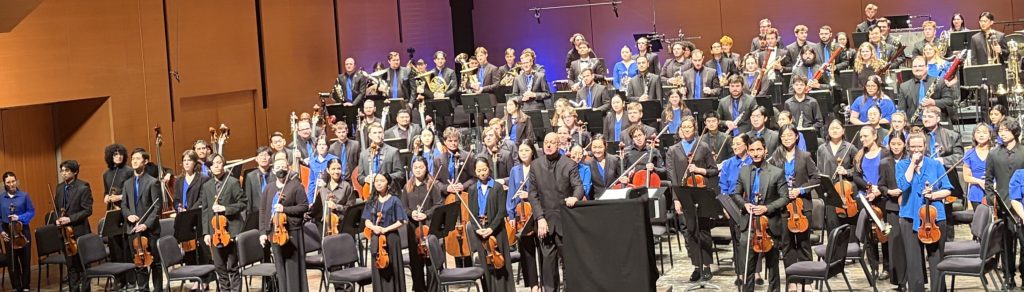
This gigantic symphony of fifty minutes with 130 musicians was the endpoint of Romanticism. World War I shattered the Romantic aesthetic and produced Modernism. We now live in a post-modern world with the threat of cultural dissolution, and the hope of intertextuality between colliding cultural memes that offer new avenues of innovative cultural
synthesis….