by Kevin T McEneaney
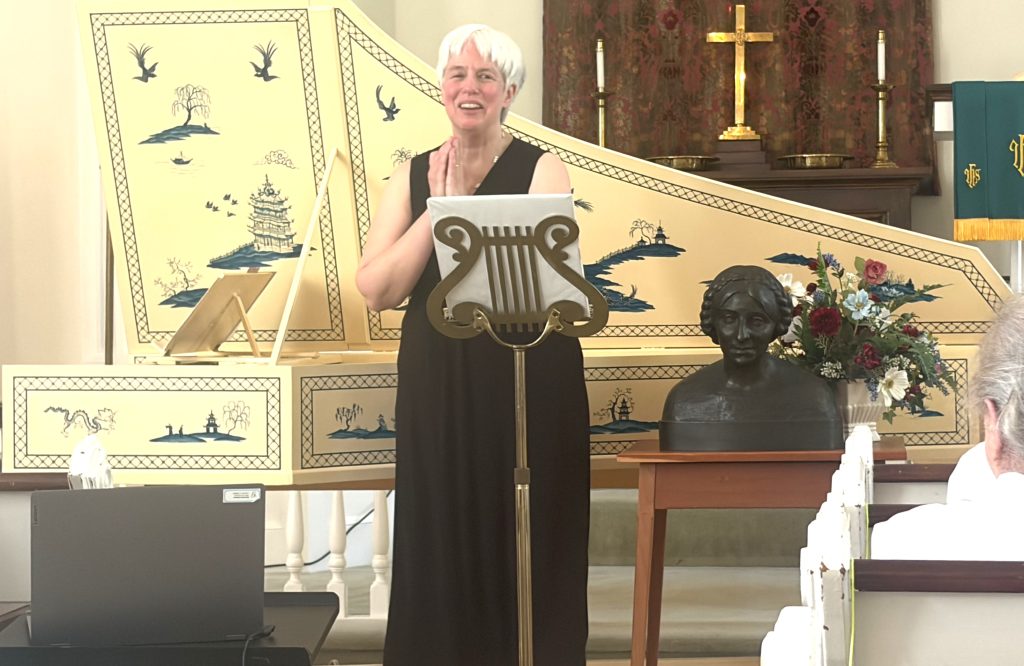
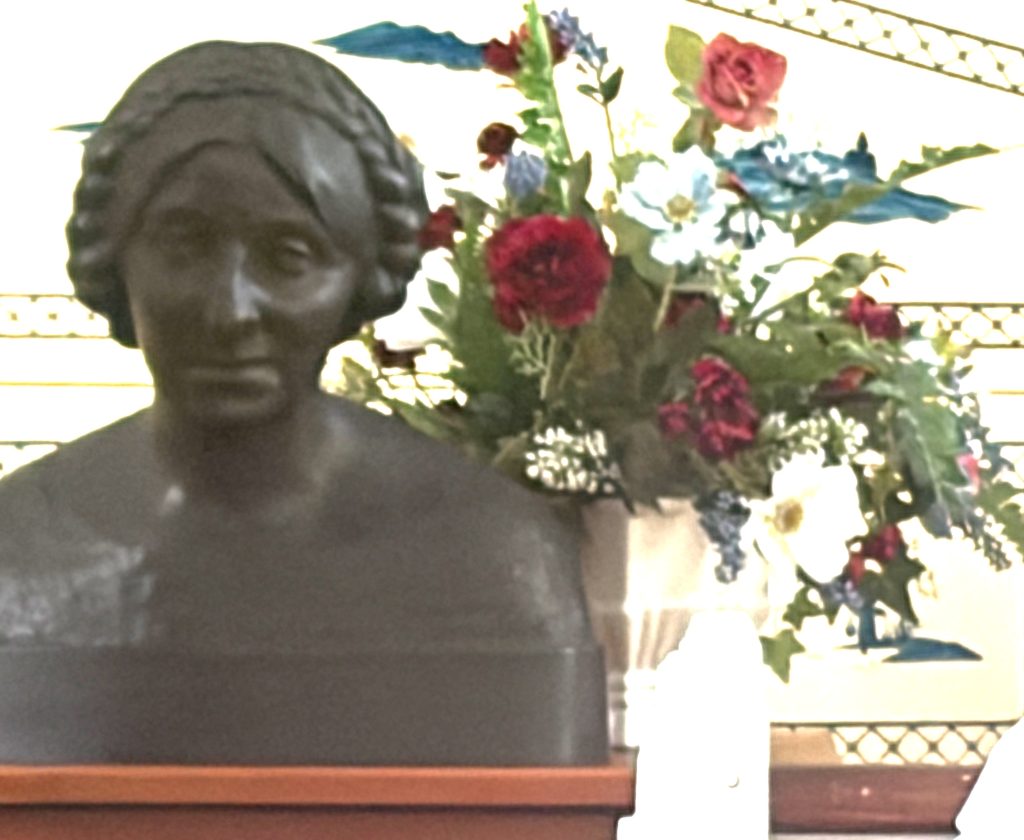
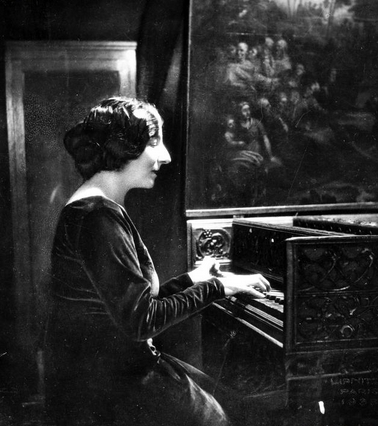
Last Saturday at the United Methodist Church in Lakeville, CT, Christine Gevert of Crescendo conducted a solo recital celebrating Wanda Landowska (1879-1959), the first modern musician-scholar to pioneer the revival of harpsichord music and to discover scores by J.S. Bach and other period musicians in libraries across Europe. Many of her discoveries were early manuscripts of noted composers. At the beginning of World War II, she had a contract to record early Bach compositions. During the recording in Paris, German bombers attacked the city. She successfully argued that the noise of bomb explosions be featured in the recording.
In the early 1900’s, early keyboard music was performed only on contemporary pianos. Wanda was the first person to revive many early harpsichord compositions in the 1920’s. She spent the last ten years of her life in Lakeville, CT.
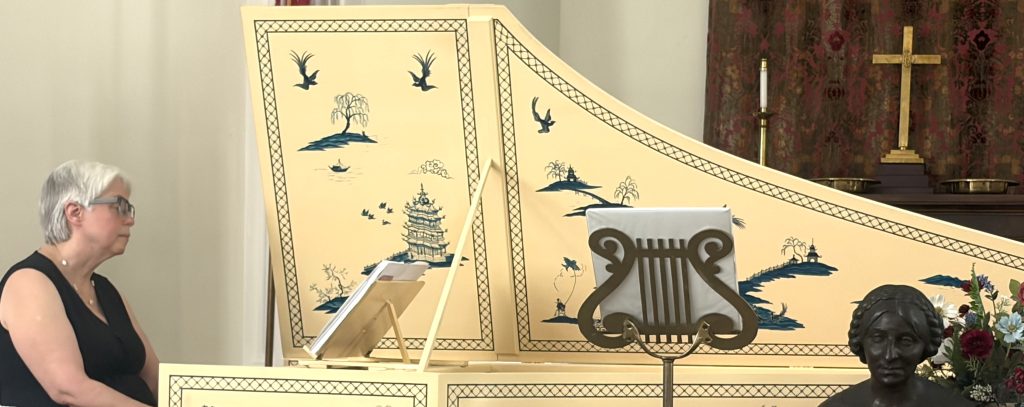
The concert was performed on a harpsichord built in the Flemish style by a local husband and wife from Lakeville. “The Calling of the Birds” by Jean-Philippe Rameau (1683-1764) opened the concert. This was a charming and witty musical imitation of bird calls in early dawn. Early harpsichord music centered around religion and landscape. Gevert herself is a legendary master of the harpsichord and organ.
In like fashion, “Capriccio on the Cuckoo” was a humorous take on the famous bird that never has its own nest. This was performed on a period virginal built in 2020 by the same couple who constructed the harpsichord. The comic descending intervals were amusing. “The Hen” by Jean-Philippe Rameau followed. This was another popular work by Rameau, who was the most sophisticated French composer of his era.
Three early compositions followed by three great musicians who were born on the same day in Europe: Domenico Scarlatti, Johann Sebastian Bach, and George Frederic Handel. I preferred this robust early work composed in Italy, Suite No. 2 in F Major, with four movements: sophisticated, elegant, empathetic, and culminating in an exciting, triumphant fugue.
The audience was asked to sing “Amaryllis, my fair one” by Giulio Caccini (1546-1618), a noted Florentine composer. On the virginal, she then played a later, lengthier, and riveting expansion of the haunting melody, Amarilli, mia bella by Peter Philips (c. 1560-1628). This work showcased the development of secular love music.
On the virginal she then played a Chilean Cueca compiled by Maria L. Sepúlveda, arranged by Gevert. This charming tune, “A young man asked a girl” (1945) illustrated how secular love songs travelled the globe. Landowska’s advanced degrees were from Germany and Chile, while she was an adopted citizen of France. Gevert’s advanced degrees are from Germany and Chile.
The concert concluded on virginal (due to a snapped string on the harpsichord) with Ciacona in G Minor, BWV 1179 by Johann Sebastian Bach, a recently discovered early work that was found in the Royal Library of Belgium. This youthful composition displays a rather daring sense of harmony and concluded with a vigorous and complicated fugue that displayed Bach’s genius at an early age.
Christine Gevert is the founder of Crescendo and the ensemble Les Inégales, as well as Music Director of Trinity Episcopal Church in Lime Rock, CT.