by Kevin T McEneaney
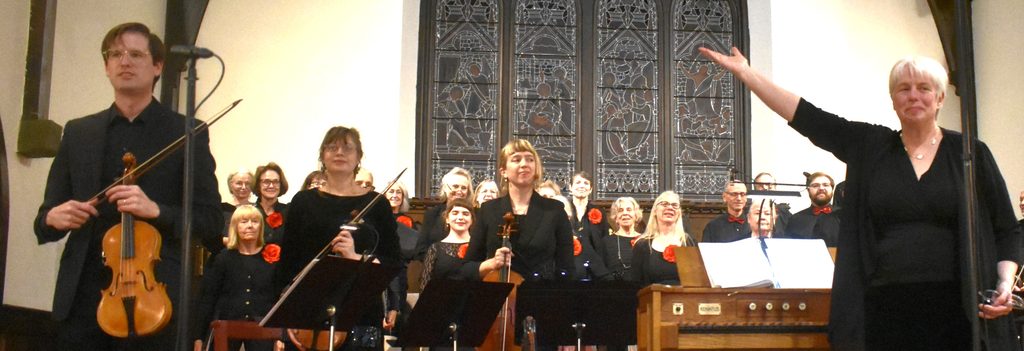
This past Sunday at Trinity Episcopal Church, Crescendo, under the direction of Christine Gevert, produced a program under the title Gallant Fire,” centering the playlist around a recently discovered choral work by Antonio Vivaldi (1678-1741). This was the American premiere of this work (the only choral work of Vivaldi that we have). Vivaldi claimed to have composed 94 operas, but we have only the titles of 51 operas and none of the scores. Vivaldi was a violin prodigy at the age of eleven when he began playing in his father’s orchestra; he became the most famous violinist and composer of his era.
The concert opened with Sonata al Santo Sepolcro in E-flat major, RV 130 for strings and basso continuo, by Vivaldi, and played with resonance by Luke Stence. This was (as the title indicated) a rather solemn meditation on those buried in a church sanctuary.
Vivaldi’s contemporary rival was Antonio Lotti (1667-1740). They performed Dixit Dominus in G minor for chorus and strings. The third movement of the four movements. Featured solos by tenor Kevin Ray and alto soloist Laura Evans, who sang with velvet eloquence.
The Vivaldi Aria “In furore justissimae irae” offered the more vigorous pace that earmarked Vivaldi’s robust signature style.
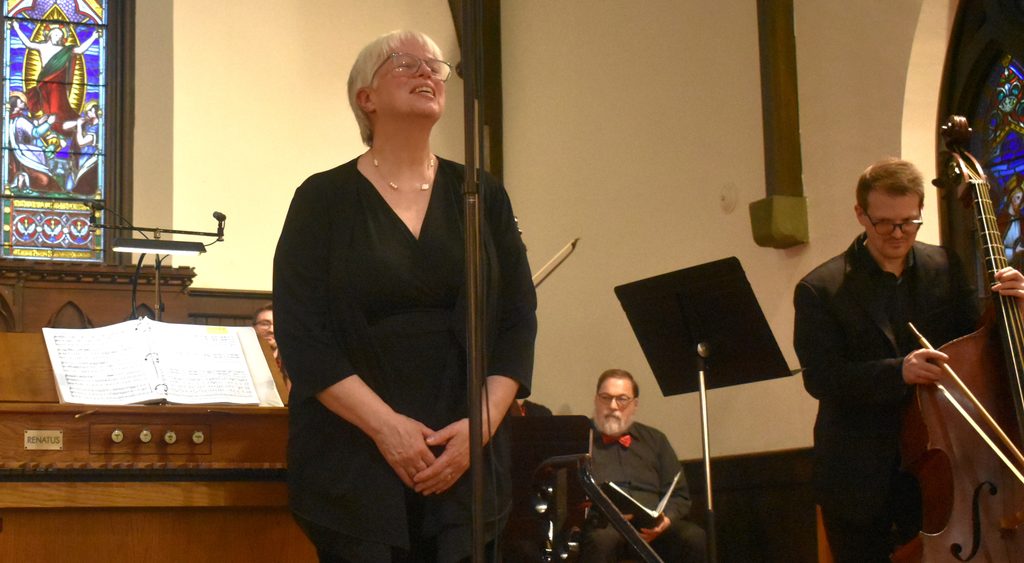
The orchestra performed Ciaccona in B-flat major, Op. 2, No. 12 by Antonio Caldara (c. 1670-1736), another Antonio rival who composed about seventy operas and was a master of the sonata format. Here, the orchestra played with formidable unity with violins soaring and Gevert at the organ with panache (she played the organ console for all numbers in the program).
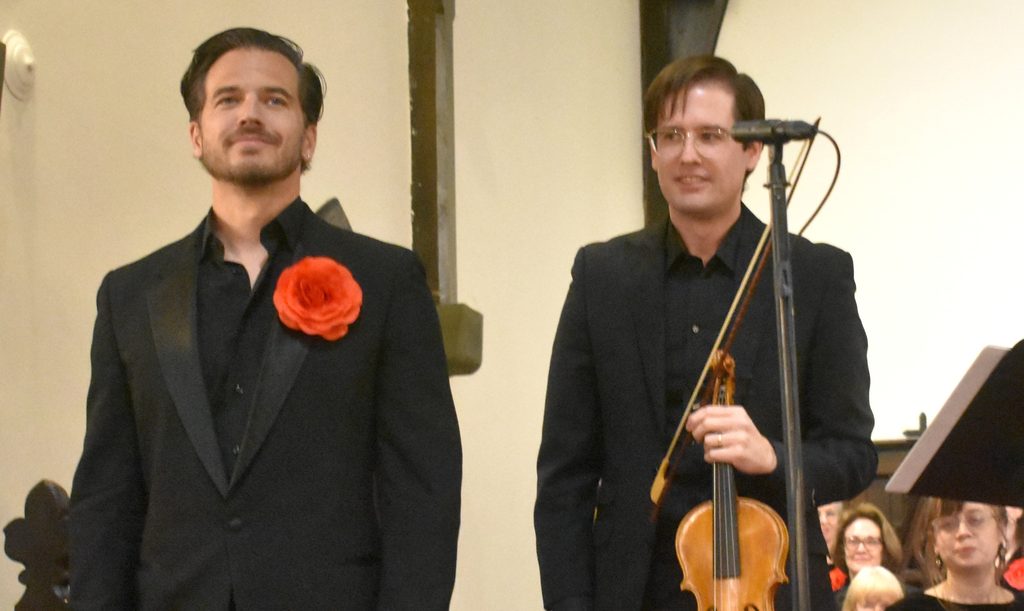
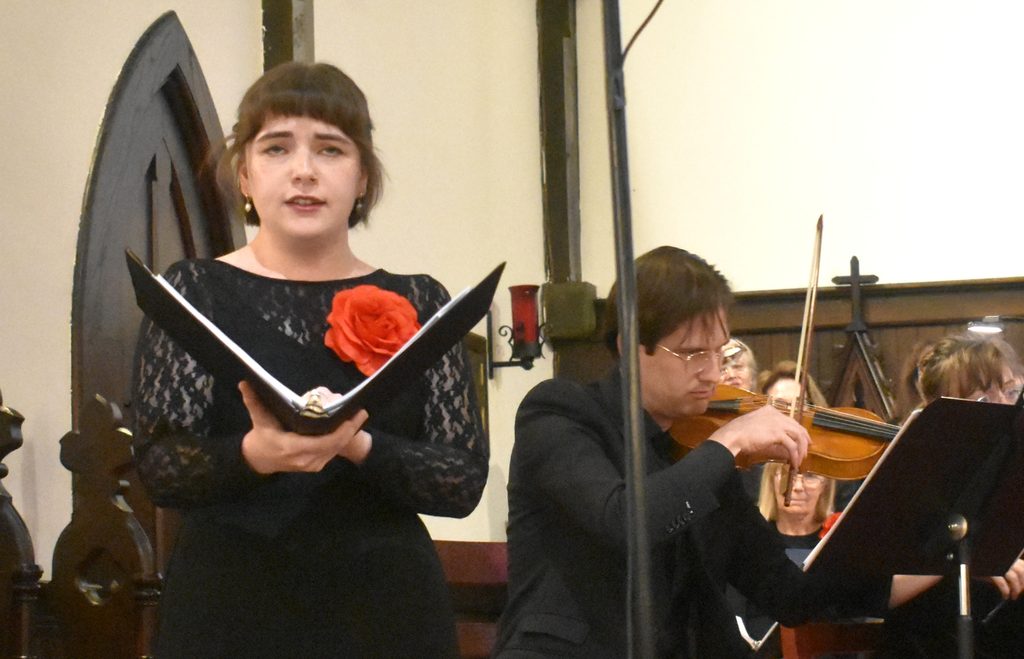
Jam scio viae poenas in E minor for solo bass, violin, and basso continuo by Alessandro Scarlatti (1660-1725) showcased another rival, famous for keyboard work. Here bass soloist Douglas Ray Williams sang with convincing authority. A Credo in C major by Leonardo Leo (1694-1744) provided a typical liturgical format wherein soprano Caroline Christopher excelled impressively with such solo force that she was decidedly memorable!
Concerto No. 3 by Francesco Durante (1684-1755), the father of sentimental church music, supplied an example of popular rigidity in musical composition that attempted to compete with the more fluent and spontaneous effusions of Vivaldi’s liquid, free-flowing style that was gallant.
The concert concluded with Dixit Dominus in E-flat major by Baldasare Galuppi (1706-1785), an example of the formidable gallant style initiated by Vivaldi. This exciting work was arranged for mixed chorus by David Larson.
Throughout the concert, violinist Jeremy Rhizor played with intense nuance. Christine Gevert managed to be both choral director and organ accompanist. Cullen O’Neil on violoncello, Annie Garlid on viola, and Revecca Nelson on second violin supplied immersive intensity.
The Baroque period was an inventive, exciting, prolific period of music that is often eclipsed by more contemporary music. Sadly, most of the music composed in the Baroque period has been lost. There are few organizations like Crescendo that recall the gallant music of the Baroque period.
Crescendo’s next concert: The Spark: Early Celtic and British Airs for the Winter Gateway on December 3 at Saint James Place in Great Barrington and December 4 at St. John’s Church in Salisbury.