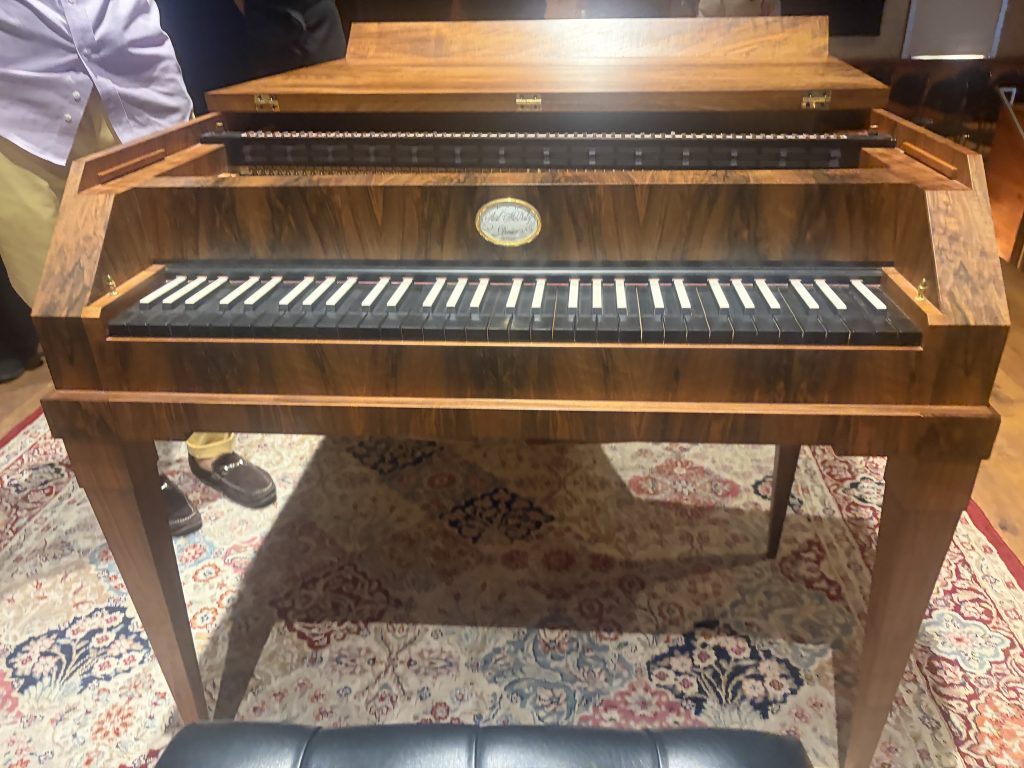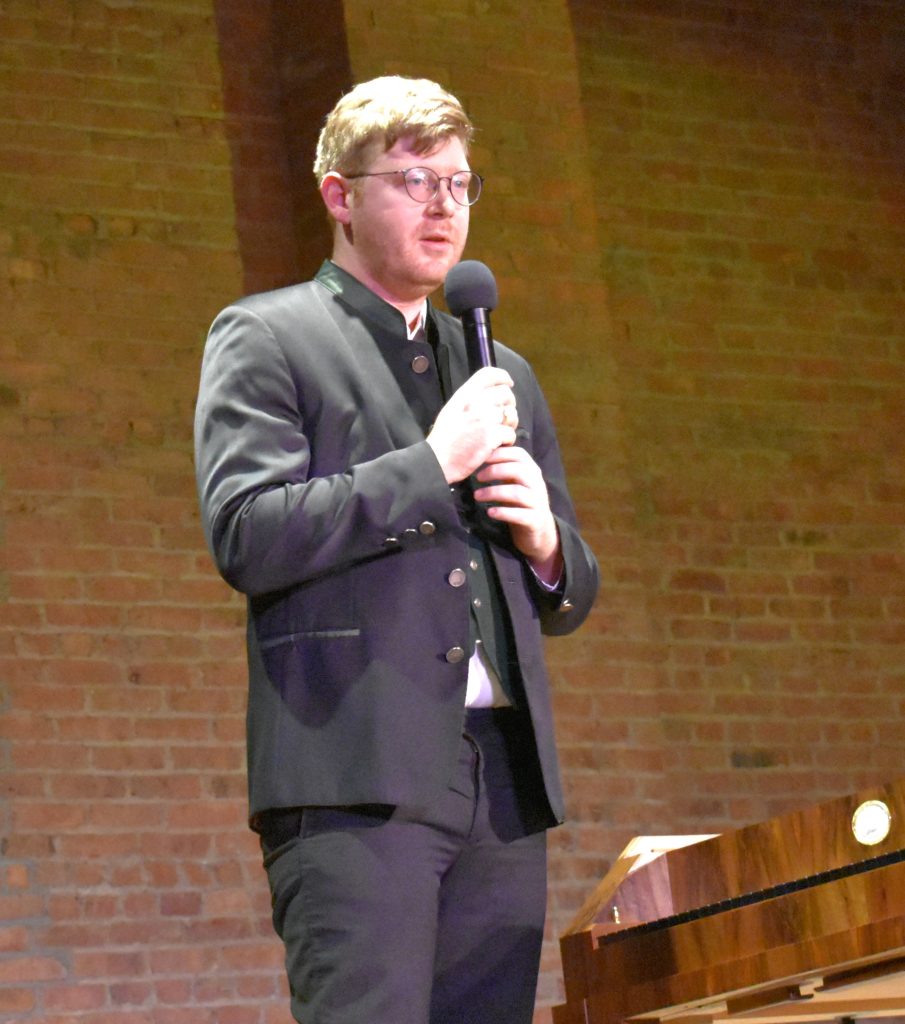
Last Sunday afternoon at the Stissing Center in Pine Plains, Daniel Adam Maltz performed a program on a newly created fortepiano that imitated the sound of an instrument during the lifetime of Mozart, Haydn, and Beethoven. The sound was closer to the tuning of a harpsichord than a modern piano. This fortepiano was built from Czech spruce with a light veneer of walnut, fingering was one tenth of current pianos, which meant that rapid fingering was much easier to achieve. Current pianos have equal tuning requirements, while with fortepianos not every key enjoys equal tuning, thus creating more complex possibilities for composers.
Maltz opened with Sonata in Bb Major, K. 570 by Wolfgang Amadeus Mozart. This was his penultimate sonata, which was most likely an instructional work for students written in February 1789. The opening Allegro features related melodies, somewhat like K. 545, a sonata for beginners. The romantic Adagio is bathed in luxuriant harmonies with songlike melodies. The Allegretto offered a light, fast rondo with songlike refrains.
Sonata in F Major, Hob. XVI:23 by Joseph Haydn was influenced by J.S. Bach and his son C.P.E. Bach. The date of composition is uncertain, yet it may also be in 1789. The opening Allegro appears to celebrate sunrise, the Adagio a stroll through the landscape of woods and meadows, and the Presto Finale exuberantly acclaims a marvelous day. This work was performed with exuberant finesse.
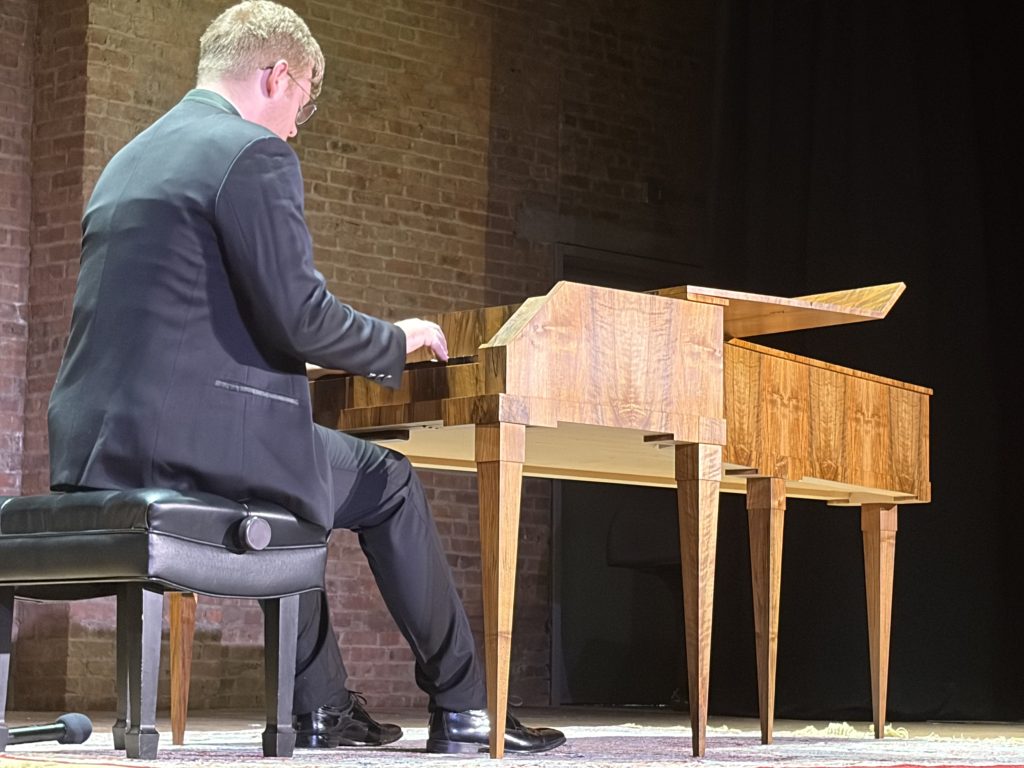
After Intermission, Maltz performed Sonata in C Major, K. 330 (1783). The critic Alfred Einstein acclaimed this composition as “one of the most lovable works Mozart ever wrote.” The opening Allegro floats airily with casual spontaneity. The delicate Andante cantabile in A-B-A form proposes deep emotions pensively restrained. The concluding Allegro soars with seemingly effortless, jaunty ebullience as it brackets a pleasant folk song. Each of the first three performances showcased escalating artistry.
Andante “favori” WoO 57 (1812) by Ludwig van Beethoven is often known as the Immortal Beloved composition, which refers to Josephine Brunsvik, a Hungarian noblewoman and former piano student of Beethoven’s with whom he shared a passionate, long-term clandestine relationship, and possibly a daughter. Beethoven fell in love with Josephine, and her father forced her into an abrupt, loveless marriage to Count Joseph Deym. Beethoven, in a July 6, 1804, letter, called Josephine “My angel, my all, my self…my dearest creature,” and signed the letter “forever yours, forever mine, forever us.”
Beethoven gave Josephine an autographed copy Andante with grazioso con Moto as his musical message of love. In the composition, there is a four-color motif: Jo-se-fi-ne is whispered many times in different tempos and ornamentation variations.
Maltz performed this work, which has elements of the famous Waldenstein sonata with soaring intensity. This was a breathtaking finale performed with amazing passion, revealing the naked soul of the greatest piano composer in history, along with Mozart, Haydn, Chopin, etc.
After the concert, Maltz invited attendees to come up on the stage and chat with him. This was a most unusual musical experience, and for piano aficionados, this was likely their most memorable concert of the year.