by Kevin T McEneaney
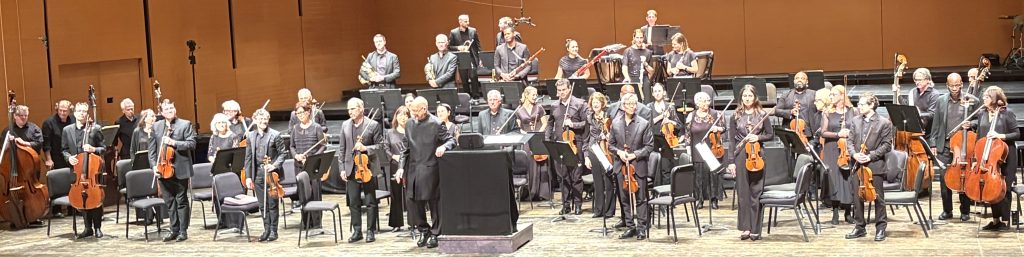
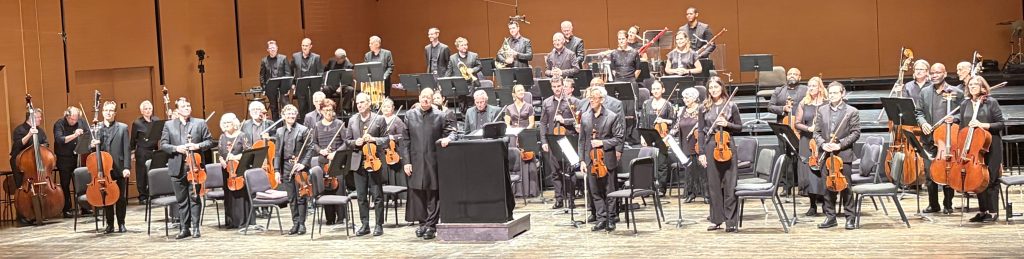
Last Saturday evening at Bard College, Sosnoff Theater, a program of Family, Friends, and Students headlined the SummerScape Mozart Festival. The first half of the concert focused on the program title, while the second half focused on Mozart.
The program opened with Sinfonia (1808) by Franz Xaver Mozart (1791-1884), the oldest surviving son of Mozart who enjoyed a musical career. Sinfonia was quite attractive with a vigorous dialectic. It opened with a city urban aesthetic with a loud, boasting, arrogant, and intimidating ambiance. The second movement pastoral reply was longer, humble, warm, soothing, and friendly without any pretenses. The third movement dramatized a musical “conversation” which was engaging. The rural replies to the city appeared to explain custom, ethics, and the importance of rural life on which a city depends. The city began to understand rural life in a manner it had not considered. Negotiation bent to compromise and musical euphony. In the Finale, the bustling city and rustic lifestyle arrived at an agreement whereby the city and rural landscape melded and improved their dual presentation. Their union improved the music of their lives and identity. This was a charming, picturesque allegory.
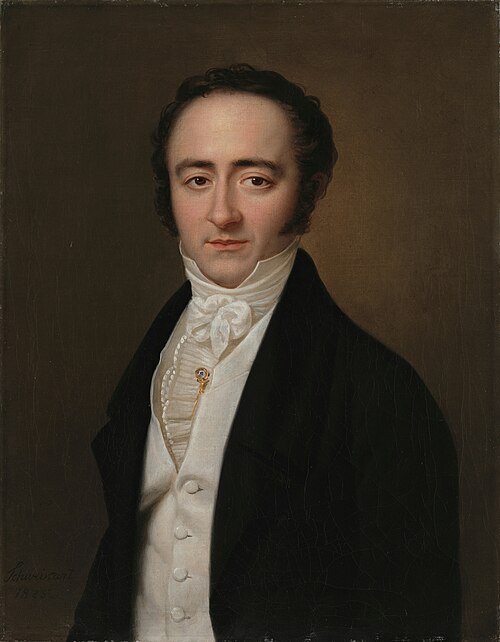
Franz enjoyed a successful career as a teacher and composer. He was a close friend of Schubert. He died without an heir. His tombstone reads: “May the name of his father be his epitaph, as his veneration for him was the essence of his life.”
Overture to Der Schulkandjdat (1792) by Maria Theresia von Paradis, an important blind composer whose work is mostly lost, was performed. This was pleasant, brief, and I could not arrive at an interpretation. Recently, three novels have been written about her.
Symphony in C Major (1770) by Marianna Martines (1759-1824) is often cited as the first known symphony composed by a woman; it blends a light, tuneful Viennese style with energetic Italian operatic influence. There are several versions available on YouTube. Sinfonia turchesca in C Major (c.1790) by Franz Xaver Süssmayr, a student and friend of Mozart, offered another dialectical conflict: popular street music versus classical music. The opening Allegro offered samples of pop music. The Adagio proclaimed the superiority of classical composition. The Minuet and Trio movement indicated that folk music influenced classical music. The Finale celebrates the fusion of pop music with classical music. The clarinet, which is the closest instrument to the human voice, played a significant role in mediating and arranging solutions between the dueling modalities.
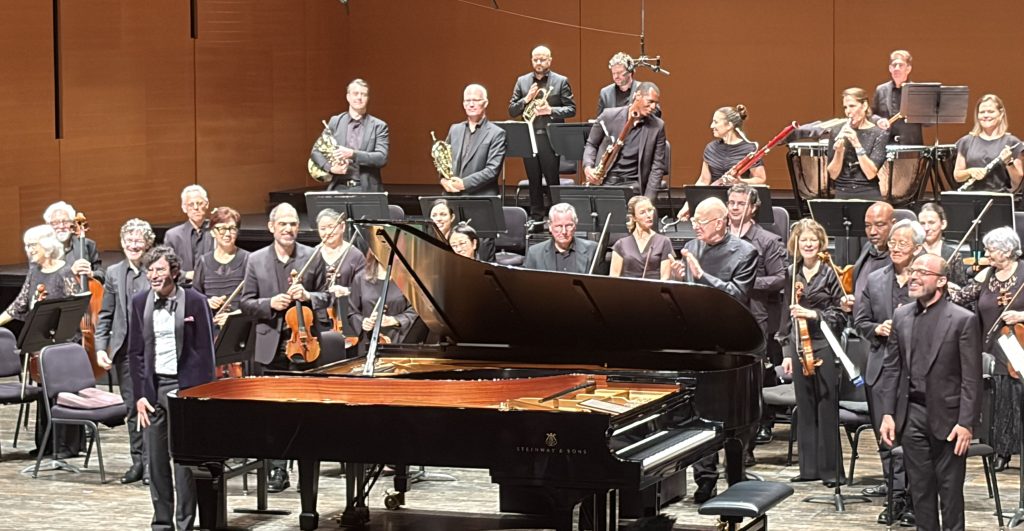
After Intermission, Concerto for Two Pianos in E-flat Major, K365 (1780) by Mozart was performed with Michael Stephen Brown and Orion Weiss on a double grand piano. For his grand tour (1764-66) Leopold Mozart invented four-hand performances on a single harpsichord, this family stunt being the inspiration for this concerto. Mozart asked his father for the score, and then he added clarinets, trumpets, and kettledrums to the outer movements.
The even larger orchestra here on-stage functions as accompaniment to the two pianos. The orchestra opens with a group declaration, then the two pianos pepper the orchestra with questions, asking them to solve musical possibilities. The first movement features a rousing cadenza, yet the orchestra then possesses a rather whimsical arpeggio. The second movement opens with declarations from the orchestra, and the pianos redirect the orchestra, which agrees with the pianos. The rondo finale offers exuberance veering toward gigantism. The finale bursts into a marvelous cadenza and one feels like the roof may come off! Brown and Weiss played from memory with superlative ease and inspired panache.
The concert concluded with Dr. Leon Botstein (he conducted the whole program) steering the American Symphony Orchestra into Mozart’s Symphony No. 36 in C Major, K425 (1783), nicknamed the Linz Symphony. From the opening double-dotted rhythms, one descends into Mozart’s late masterpiece with a full orchestra cresting on the edge of apocalypse in the second movement Andante, followed by the conventional Minuet and Trio, yet the fast Presto Finale bursts like a strike of lightning!
The enraptured audience demanded more than one bow….