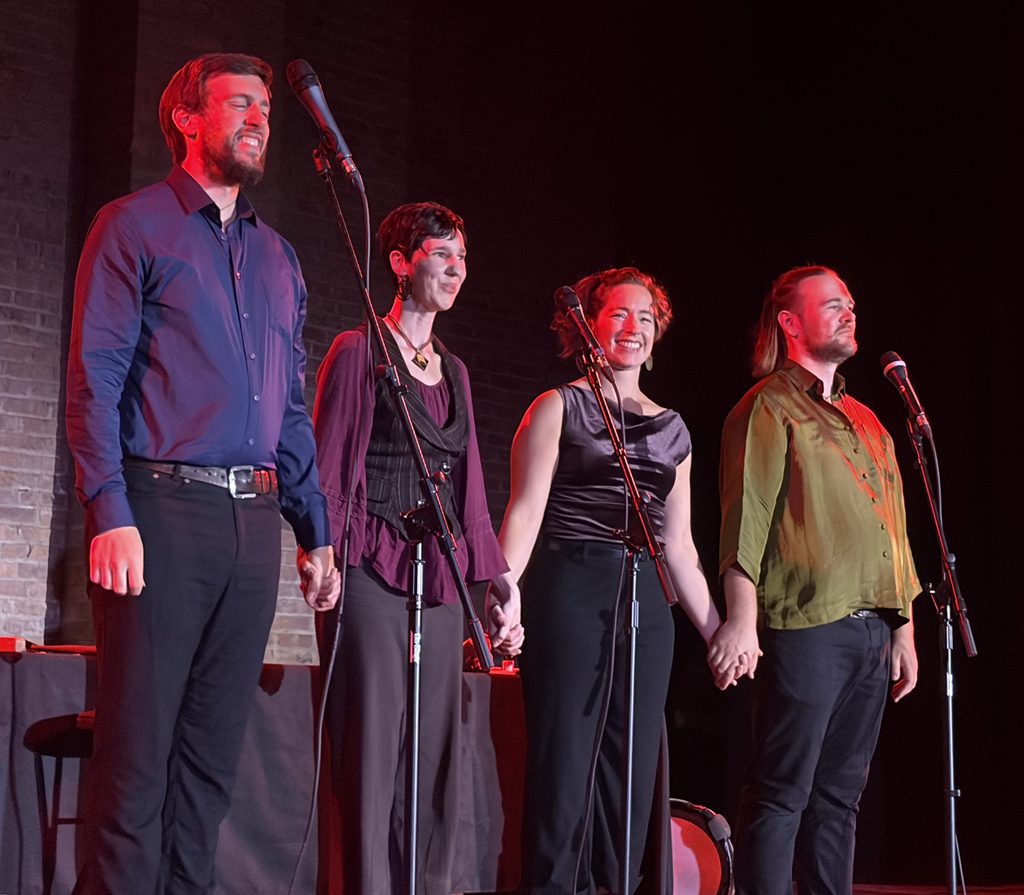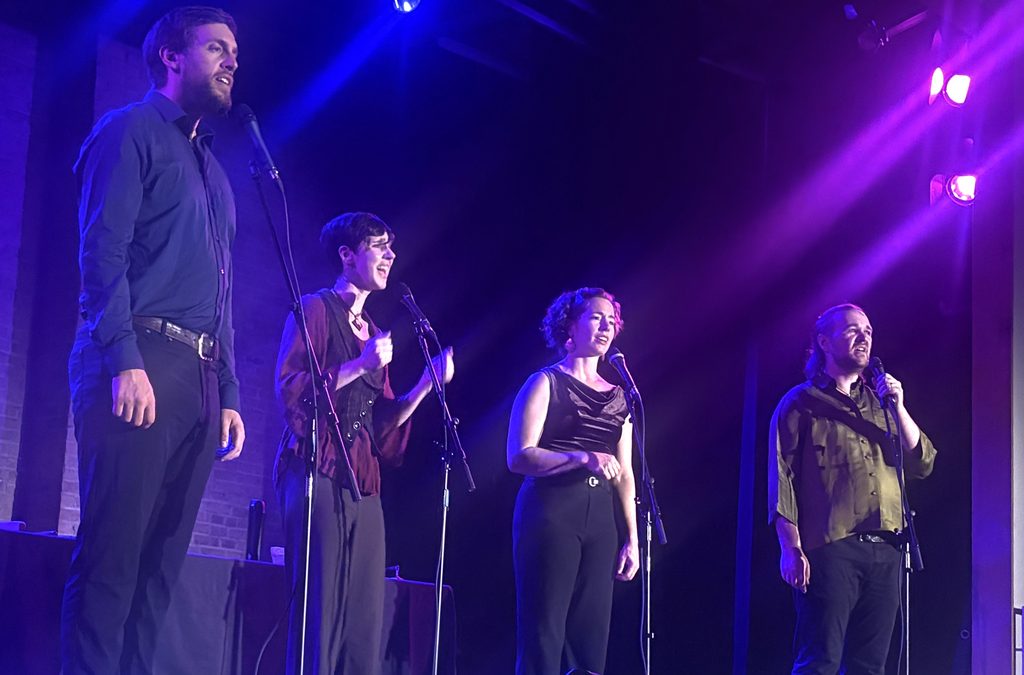
Last Saturday evening at The Stissing Center in Pine Plains, Windborne, a group with several noted CDs, entertained those with a sense of the current political situation. They are four casual masters of polyphony: Jeremy Carter-Gordon (baritone); Lynn Mahoney Rowan (soprano); Lauren Breunig (mezzo-soprano); and Will Rowan (tenor).
They sing simple or rhythmically four-part, complex harmonies as if it were as easy to sing as breathing, and they make you feel like you can rise to the level. This was an unforgettable night of pop protest sing-alongs, a night to remember, putting all attendees into the spirit of song with memories lasting after leaving the concert hall.”
They opened with “Lady of the Harbor,” a recent version of the many songs about the Statue of Liberty and what it stands for, despite our current situation. They followed up with “Hard Times,” in the version by Alan Lomax based on a 1938 field recording by Lillie Steele (collected by Alan Lomax), adding new lyric stanzas to the song, which is on their 2020 album Hard Times. (You can easily find their version on YouTube.)
Their repertoire varied from American labor songs to Medieval French, Welsh, and Corsican folk songs, and they managed to persuade the audience to accompany them in an American protest song. They next sang an English-style wassailing song about the lower classes and how they are exploited within the American context.
In Corsican dialect, they performed a lament that featured haunting, irregular rhythms, followed by two songs in the southern French Occitan dialect with accurate accent from the Noëls de Notre Dame in Avignon., Back then (1570), the French ridiculed that sneaky con-man Satan with great humor, but times have changed, and many people currently worship conmen if they make a claim to great wealth. The mocking of Satan is still staunchly practiced in some remote cabins in the hills of France, where they are fiercely skilled in the art of satire, which is to say that they excel in florid compliments whenever they meet a dunce or con-man.
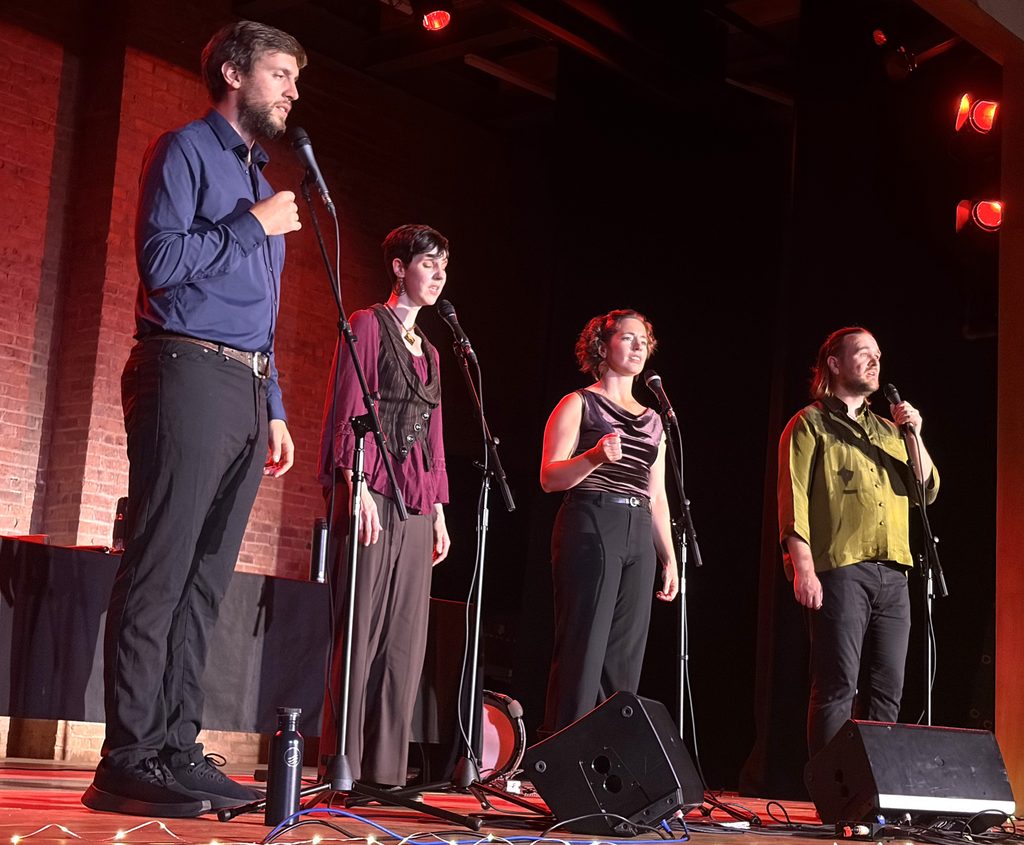
After Intermission, they performed a Depression era song about uplifting people when they are down, then a Welsh song about following a wren, then a nineteenth-century Quebec comic song about the trade of weavers. A 1931 American song about planting seeds with cheap labor at four cents a day. followed.
They sang the “Grey Funnel Line,” a satiric song about the British navy by Cyril Tawney
A tune by Woody Guthrie, “Which side are you on” was updated with their own lyrics about the folly of fascism, which was greeted with a standing ovation. The audience demanded two bows, and they performed an encore.
As performers, their four-part harmonies with simple instruments like washboard, mouth harp, small drum, foot thumping, articulate diction, phrasing, and infectious soundscape round out an immersive experience of impressive, joyous harmony.