by Kevin T McEneaney
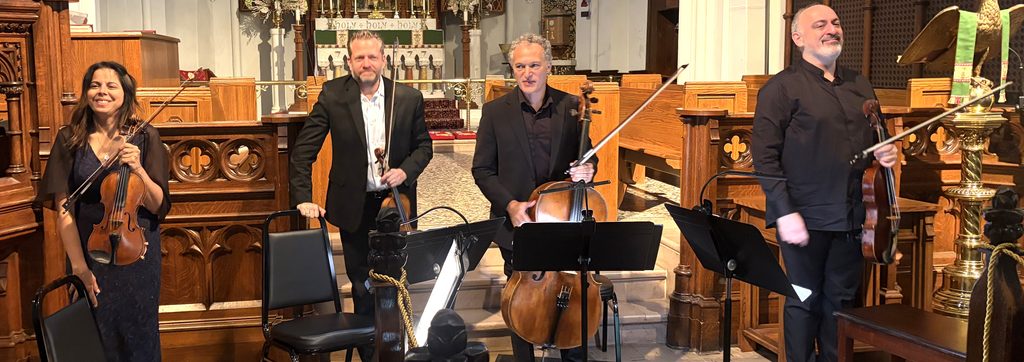
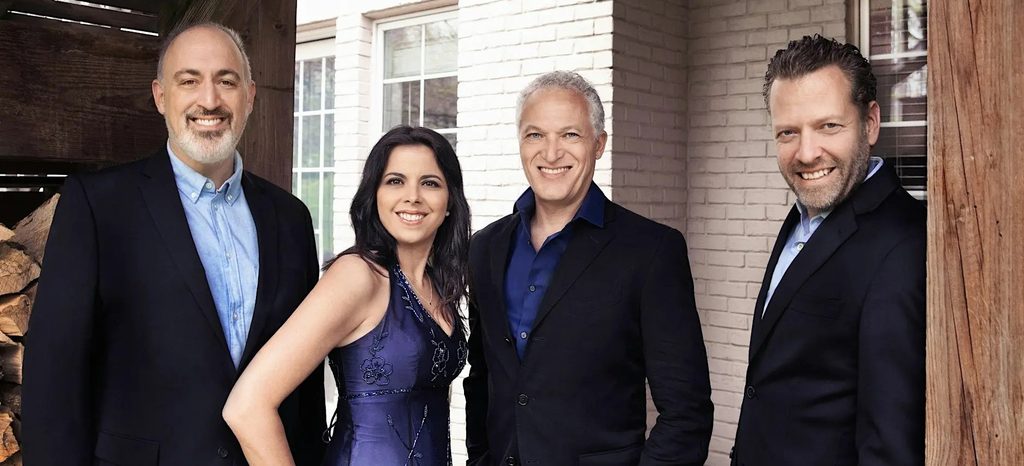
Last Sunday under the umbrella of Clarion Concerts and cloudy skies, Grammy Award winners, Pacifica Quartet, performed at Christ Episcopal Church, an historic Gothic revival church, in Hudson. They are currently in residence at the Jacobs School of Music at Indiana University in Bloomington where they teach and coach thirty string quartets. Pacifica Quartet was formed in 1994 by violinist Simin Ganatra and cellist Brandon Vamos, and it currently features violist Mark Halloway and violinist Austin Hartman.
Born in Little Rock, Arkansas, Florence Beatrice Price (1887-1953) was a pianist, organist, music teacher, and the first important African American woman composer of classical music. She composed over three hundred classical works from chamber music to symphonies Most of her work was composed in Chicago. She is currently undergoing a national revival. Much of her work employs themes from African American spirituals.
String Quartet in G major (1929)by Price is based upon the melodies of spirituals which connote sorrow and/or cherished remembrances of the past, as well as landscape, the first short movement described the memory of a vista. Technique in the second movement was startling because of rapid key changes, which reminded me of knitting activity where one is knitting various thread colors. The rapidity of the changes evoked a sense of wonder. Lead violinist Simin Ganatra delivered a sweet, plangent sound that echoed in my memory with a haunting and satisfying resonance.
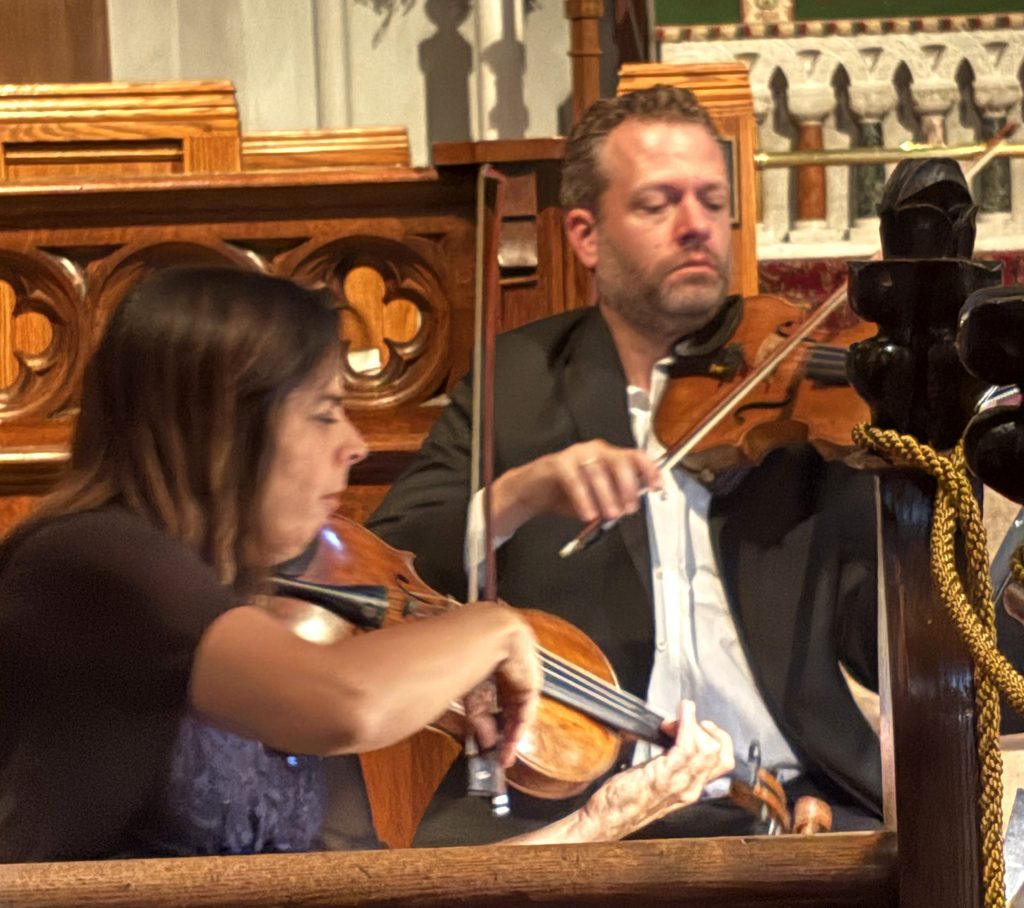
Antonin Dvořák, when he summered in the Czeck community of Spillville, Iowa, composed String Quartet No. 12, Opus 96, nicknamed “American.” This quartet was written between June 8 and 10, 1893. He organized a play through with three members of the Kovařik family on the 12th. On the 13th, he began composing a more substantial work, String Quintet in E flat, Opus 97, yet the former work remains his most popular composition.
Opus 96 brims with pentatonic melodies and appears to describe a local summer farmer’s fair and the town he is residing in. This was the second work he wrote in the United States, the first being the New World Symphony at Carnegie Hall. He revised the composition on June 23.
The opening melody of the first movement was dominated by Mark Holloway on viola with a question-and-answer melody that invites the listener into a conversation as if two people were sitting on a rural porch engaged in conversation and the audience was a third party overhearing the conversation. Some commentators connect the assertive viola to the opening of From My Life by Bedřich Smetana.
The following Lento introduces melodic material with accents on the Minor Scale, which is a characteristic signature of the Blues and where cellist Brandon Vamos excelled.
The notably melodic third movement where Simin Ganatra on first violin exuded energy is based on birdsong that Dvořák heard during a walk at dawn, a movement everyone finds simply delightful.
The fourth movement features syncopation, a feature of Czech music (as well as a prominent signature of American jazz); here cellist Brandon Vamos and Austin Hartman on second violin were able to evoke a hectic sense of jazz improvisation that describes the country fair, and concludes with the chug-chug hooting of a train whistle by violist Mark Halloway! This symphonic blend of instruments delivered such astonishing nuance that they made memorable a composition I have heard with pleasure many times!
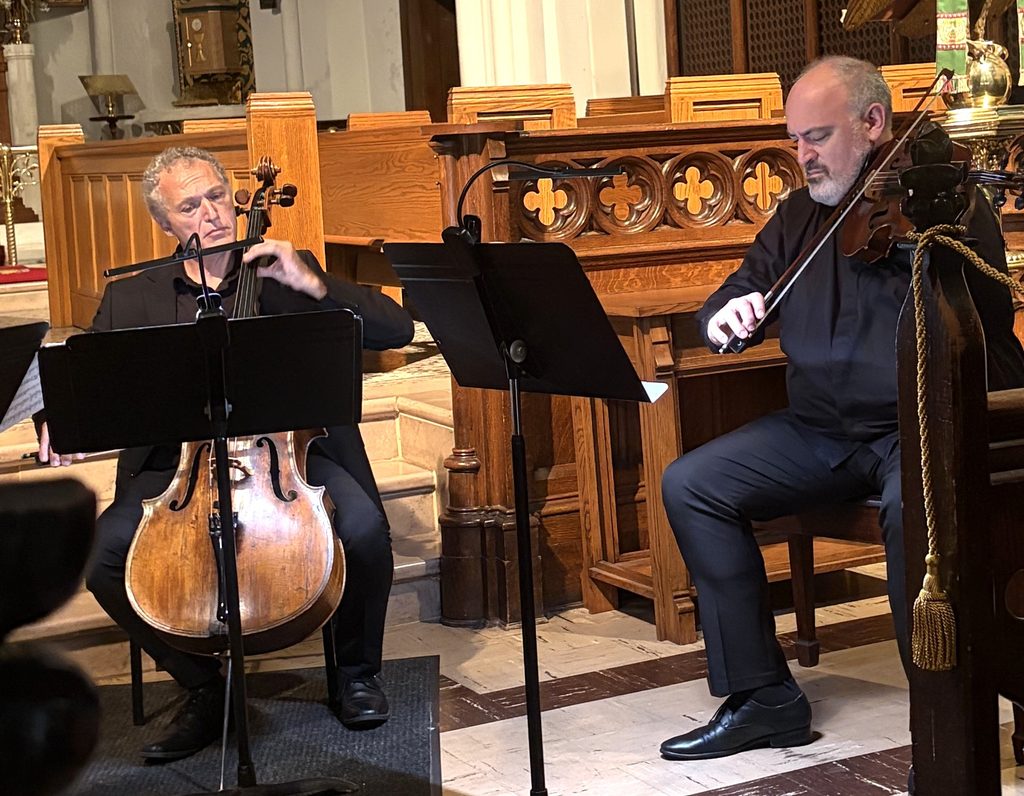
After Intermission the audience made the transfer from pleasure to astonishment with Ludwig van Beethoven’s String Quartet No. 13 in B-flat major, Opus 130 with Grosse Fuge, Opus 133. Opus 130 was written from August to November of 1824, with its first performance in March 1826. This composition in six movements is the most amazing work in all quartet history.
Some of Beethoven’s works can be dark, yet I was moved by the optimism and eclectic diversity of instrumental interplay as extended group conversation, projecting fraternal conversation and debate.
On first violin Simin Ganatra soared with fierce emotion with support from Austin Hartman while Mark Halloway on viola stretched the range of his instrument to astonishing levels, and Brandon Vamos on cello delivered the lowest of low notes possible and it seemed like the three other players were standing on his shoulders.
Grosse Fuge, Opus 133 (1825) by Ludwig van Beethoven remains an unusual Beethoven work, one might say it is a Jacob’s robe of many colors—it is a puzzling mixture of motifs that magically coalesce into a whole, yet it is difficult to understand how this happens. The more one listens to the work, one’s pleasure in it grows. Musical fragments are seemingly haphazardly tossed about; one confronts confusion, yet one listens carefully, the finale appears as a great deliverance from confusion. Stravinsky called it “the most perfect miracle in music.”
After the concert there was a genial Q & A with local music students and the Quartet. Clarion Concerts will host the acclaimed London-based Kaleidoscope Chamber Collective on October 25 at 3 pm at Christ Episcopal Church in Hudson.