by Kevin T McEneaney
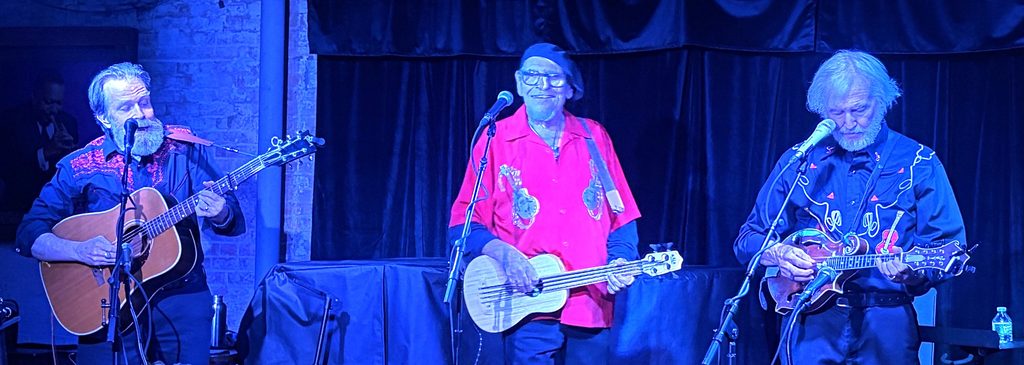
Have you ever been to The Grace Note? That’s the basement East Village-like nightclub/cabaret setting for intimate music that hosted the current incarnation of the long-lived folk song trio. While this performance was partly nostalgic, it was also brazenly topical with new material like the witty, amusing satire on Artificial Intelligence, “What Could Possibly Go Wrong,” as well as other new topical comments on the state of American culture.
The Limeliters are a powerhouse trio of superb players who all play a few string instruments, as well as projecting their fast-paced blending harmonies with clear diction. As for their peculiar name of Limeliters, which goes back to 1959, when they played and sang at a nightclub named The Limelite in Aspen, Colorado. They were, for many years, the opening act for The Kingston Trio.
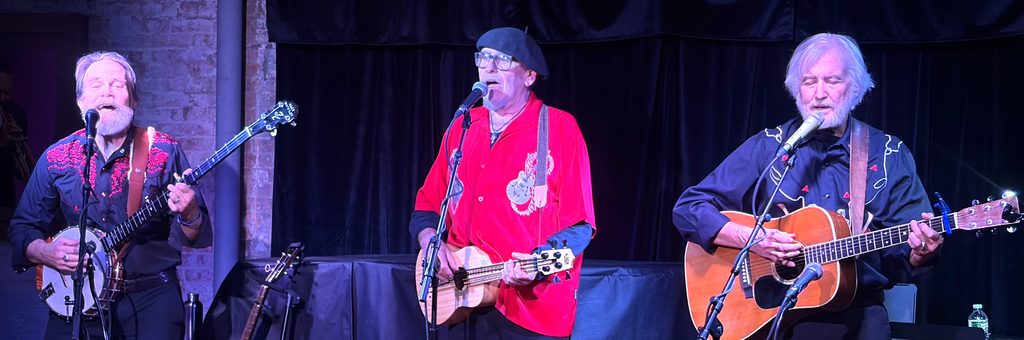
While the original group consisted of Lou Gotlieb, Alex Hassiliv, and Glenn Yarbrough, the current lineup is comprised of Andy Corwin on bass, Steve Brooks, baritone, and Daniel Boling, tenor.
Song subjects ranged from family to social satire to love sentiment. They claim to have never had a big commercial hit, yet some of their songs were “If I Had a Hammer (1960, four years before Peter, Paul, and Mary made a chart-topping hit in 1964), “Turn, Turn, Turn,” and “Those Were the Days,” which were popularized by other singers.
Their biggest hit was their commercial for Coca-Cola in the mid-1960s.
A few of their current songs were delightful: “I’ll Take Your Home,” You Might Be a Baby Boomer,” and “We’re Not Happy,” as well as “Dad’s Garage,” and especially “The Cutting Edge of Passé,” an amusing song about generational disconnect.
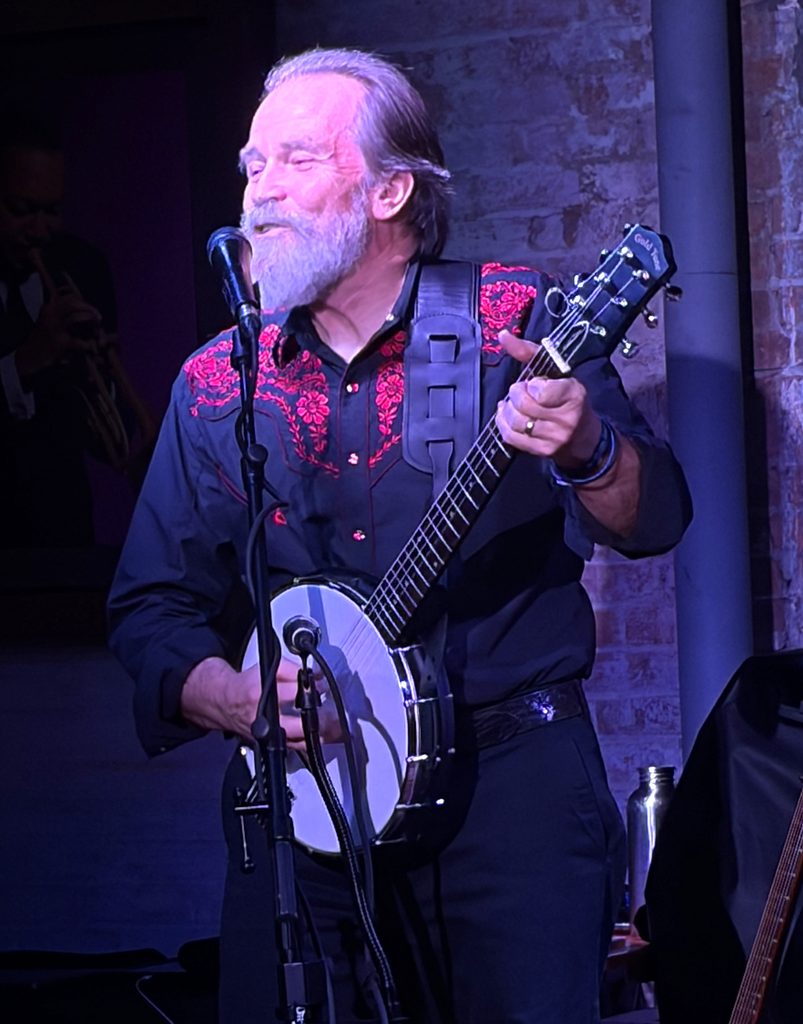
Andy Corwin introduced each song with zesty anecdotes and raucous, slightly mischievous humor, as he limned historical background with folksy punch lines and amusing stories. Daniel Boling was casually adept with striking harmonies, and Steve Brooks delivered witty asides and amazing string fingerings. Each player performed on three different instruments as if they were a different band for each song. Their national touring schedule performances are three days a week. The length of their performance concert was two hours.

After a fifteen-minute break, the second half offered several popular folk classics like “Seven Daffodils” by Lonnie Donegan (1961),” “There’s a Meetin’ Here Tonight”, “The City of New Orleans,” “The Power and the Glory” by Bill Ochs, “Through Children’s Eyes,” a Carter family song, “Wabash Cannonball,”: a song about leaving a beloved on a train, “Whiskey in the Jar,” and a remarkably fierce rendition of “John Henry.”
They sang “I’ll Take You Home Again, Katheleen” (1875), written in New York State, a song inspired by an American by the name of Westendorf who married a woman from Ireland; she was homesick for her native country.

“Will He Ever Return,” a humorous story of a man named Charlie who boards Boston’s subway but never comes back (this was an election song in Boston), and they rewrote the lyrics, updating the satirical story of Charlie with Charlie and the TSA.
The Grace note is a wonderful, intimate addition to the remarkable renovations of The Stissing Center platform under the leadership of Patrick Trettenero.