by Kevin T McEneaney
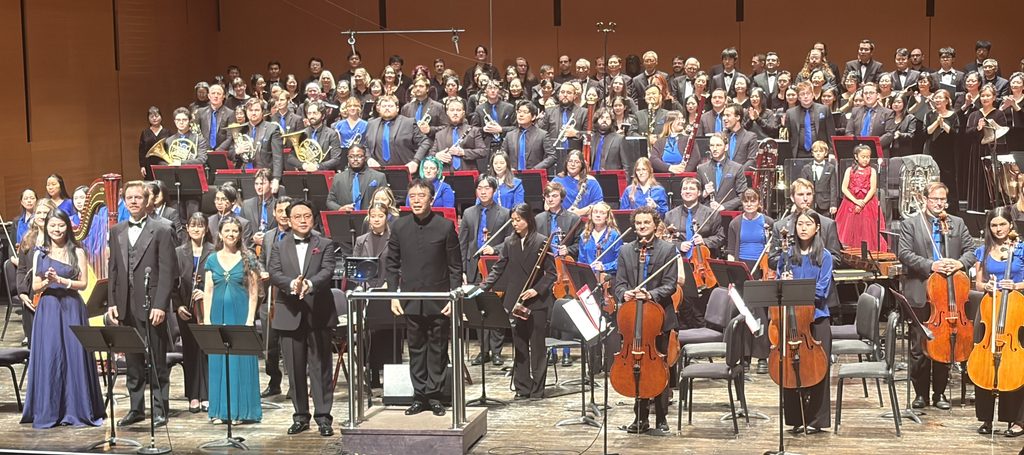
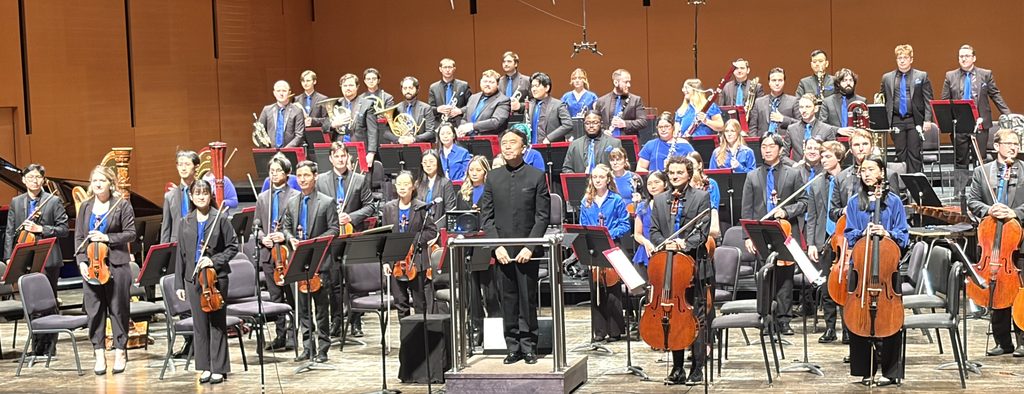
The production of the China Now festival under conductor Jindong Cai, an annual production by Bard College (now in its ninth year), delivered two epic compositions at Sosnoff Hall last Saturday. Chasing the Sky by Li Shaosheng (b.1988, who studied at Juilliard and received his doctorate at Missouri State College) was present at this extraordinary premiere, which offered an exuberant celestial experience with a gathering of expert Chinese musicians, accompanied by Bard College’s The Orchestra Now.
Chasing the Sky is a visionary work that will remain a classic for future centuries to look back upon with enthusiasm. “Celestial Vision,” the first of five movements, opens with the mythological figure of Chen, who flies to the moon, as depicted in the Buddhist Dunhuang murals from the fourth to the fifteenth centuries in the Mogao caves, which have been an inspiration for painters, poets, and musicians for many centuries. Here, the violins under Shan Bai soared with impressive impulse while the flutes of Youbeen Cho, Wen-Hsiu, and Christian Middy soared with resonance.
The second movement, “Questioning the Sky,” offers a dialogue between humanity and agrarian culture, despite variations in weather and seasons, as the music depicts the pleasures of sunshine, rain, harvest, or difficult times like floods, which enhance musical drama and let loose the cellos under Hannah Brown, as well as the bass instruments under Jack Corcoran.
“Flying Apsaras” charts the growth of rocketry and human inspiration to explore the universe. This movement was especially thrilling due to the trumpets of Nathan Lyle, Kassandra Miano, and Issac Morton, who were saturated with emotion, and especially thrilling was the suona soloist Zhang Weiwei, one of the professors from the Central Conservatory of Music, who nearly blew away the whole orchestra with an unforgettable performance.
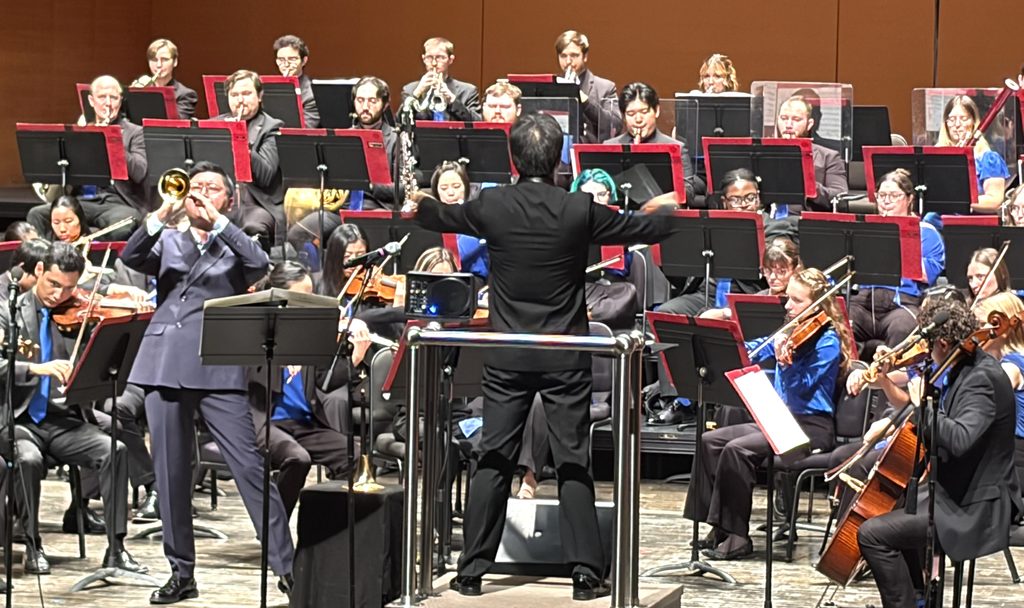
“Exploring the Sky” provided a mellow, introspective exploratory meditation on the immensity of the universe with its unending mysteries where the violas under Benjamin Duke delivered out of this world sense of the infinite. Tenor Li Yi eloquently sang poetic lyrics about the marvelous universe composed by Ye Jington; Li Yi sang with profound mystic elevation.
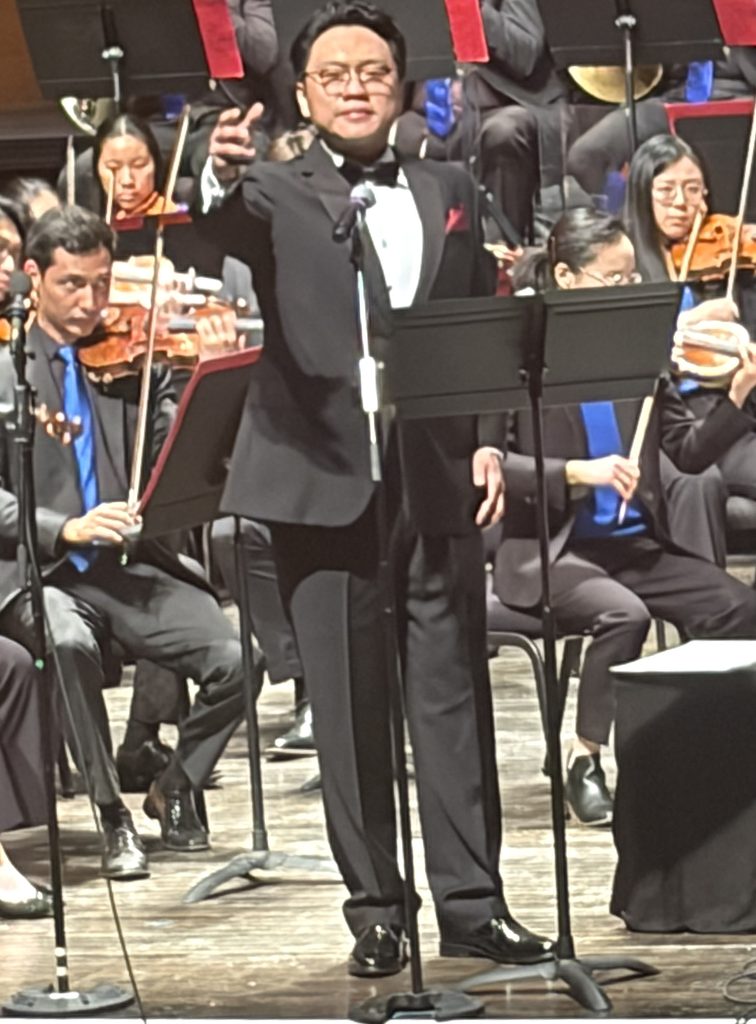
The concluding movement, “The Heavens Move with Tireless Vigor,” furthers meditation on the infinite with a lively depiction of wonder, the possibilities of future civilizations experiencing a profound peace and harmony that the universe harbors with immensity indescribable in human language.
Percussion was important to the dramatic ambiance of the work, which demanded tight rhythmic swells by the team of Jonathan Monk, Anthony Kirk, Benjamin Krauss, Kelsey Choi, and Sean Swenson (timpani).
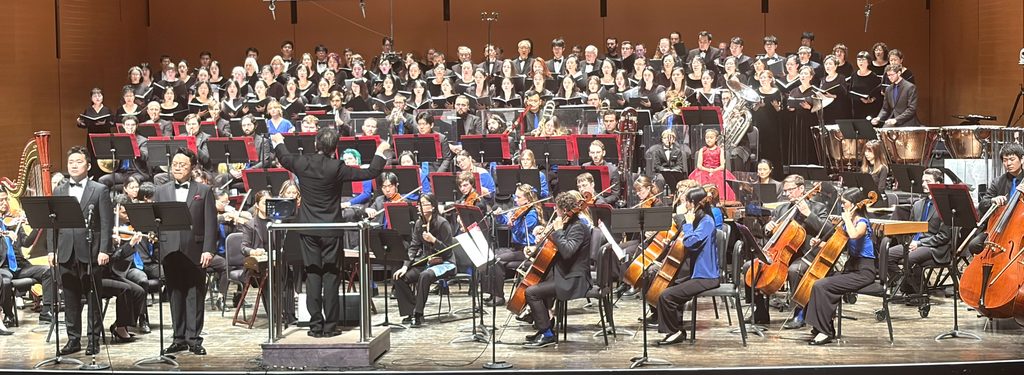
After Intermission, the symphonic oratorio Men of Iron and the Golden Spike celebrated the achievement of the approximately 20,000 Chinese workers who, between 1863 and 1869, helped build America’s transcontinental railroad, which connected the United States to the two great oceans. (Only about 1,200 returned to China. Thousands died from accidents involving avalanches and misuse of dynamite.)
What was more astonishing was hard to say: the magnificent music, the lyrical soloists, the dramatic architecture of the libretto, the vibrant chorus, the performing orchestra. This overwhelming event, a fantastic banquet, offered too much to digest in a single hearing.
Although most Americans possess the vague notion that the spine of this country was built by predominately Chinese laborers, the details of this dangerous undertaking have long faded from their minds. We live at a time when the globe needs to unite to confront the perils of the future—at a time when China and the United States need to be resident in the halls of amiable friendship, and not distant paranoid antagonists.
The structure of this oratorio in nine parts alternates between orchestra, soloists, chorus, and narrator. The chorus consisted of one hundred singers from the Yale Chinese Chorus, the Chinese Chorus of New York.
The role of the Narrator by Bass Andrew Munn (marvelous job!) remains akin to the role of the narrator in Aaron Copland’s Lincoln Portrait (1942). This was where Su Wei’s libretto played a key role. Tenor Li Yi arrived to enhance nuance. Beitong Liu on ehru was memorable.
The varied segments enjoyed adept musical transitions amid tragedy, separation of families, harrowing work, flirting for comic relief, immense cooperative achievement, and the hospitality of lasting friendship.
Yet above all this magnificence were the coaching and arcing arms of Conductor Jindong Cai—he was the man who brought the heavens down to endow the music with mystic power, eliciting from the 100-strong chorus the song of the earth and its heavy burden.
If you missed this week’s celebration of Chinese Music in America, you are missing one of the most vibrant strains of world classical music in this century.