by Kevin T McEneaney
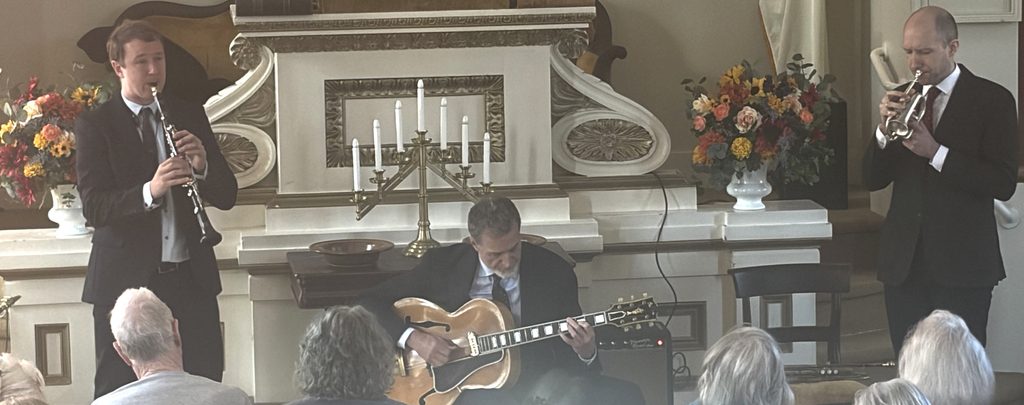
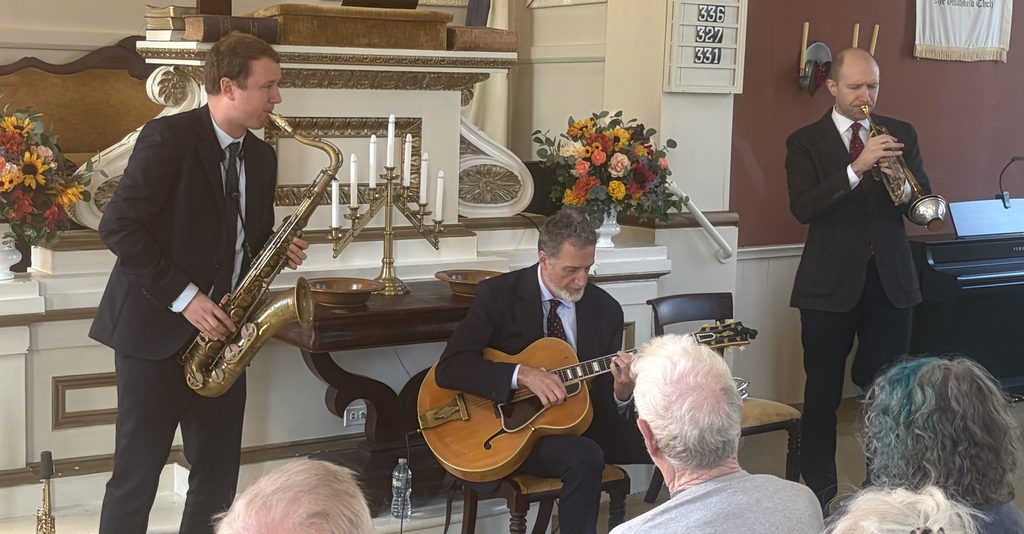
On a golden autumn afternoon surrounded by blue sky and leaves boasting red, orange, yellow, and brown, the Pete Anderson Trio performed a program of favorite Gershwin tunes. The Trio consisted of Pete Anderson on tenor saxophone, clarinet, and soprano sax (joking that he put the tenor sax in the laundry dryer), Matt Ministeri on guitar, and Joe Boga on trumpet and rare pocket cornet. The trio offered their own spontaneous arrangements of classic Gershwin favorites without a script in the acoustically superb sanctuary.
They opened with “I Got Rhythm,” which invites funky solos, traditionally on trombone and clarinet, but here on saxophone, 1954 electric guitar, and weathered trumpet. And yes, they had a swinging rhythm that planted an infectious smile on the faces of attendees who still possesse memories of more youthful days than the dominant white hair on their heads. Their novel signal arrangements proved that the sophisticated depth of Gershwin’s music resembled a flexible Rubik’s Cube of possibilities in the hands of adept musicians.
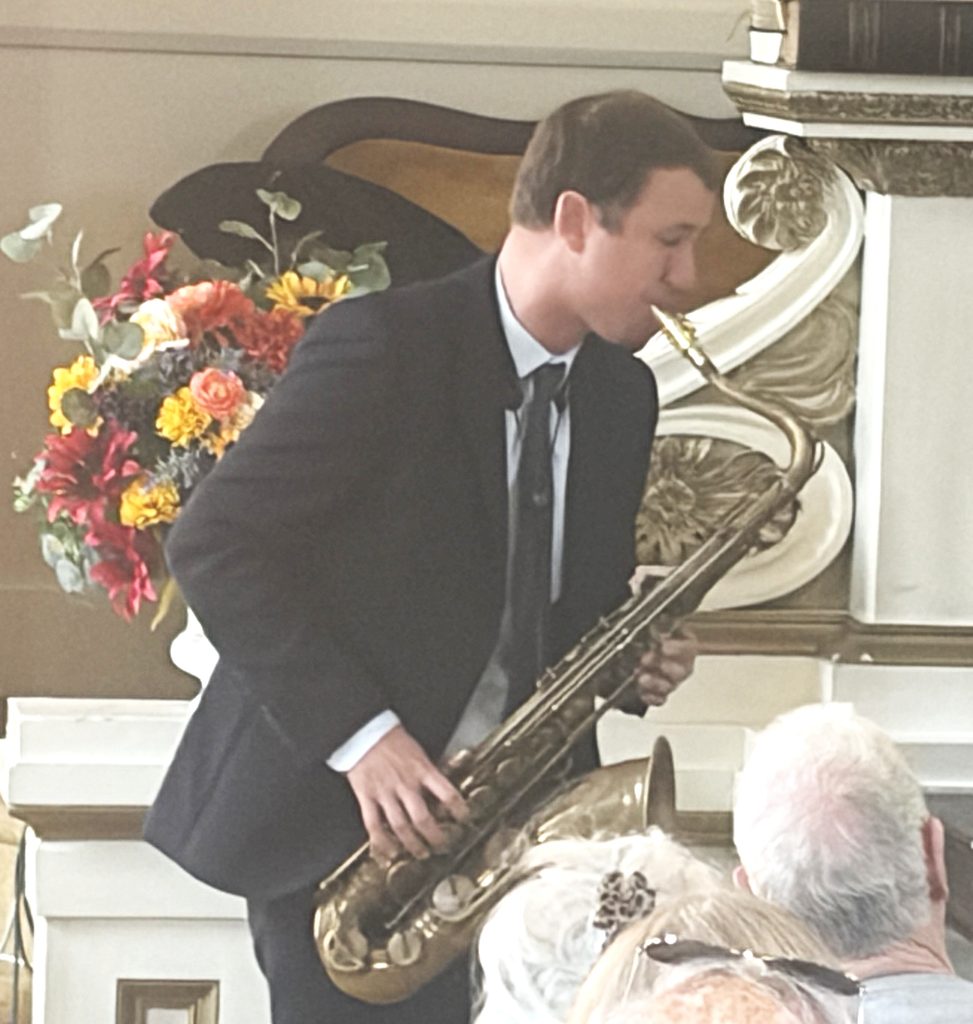
“They Can’t Take that Away from Me” (song lyrics were by Ira Gershwin) first appeared in the 1937 film Shall We Dance, a masterpiece of nostalgic young love that starred Fred Astaire and Ginger Rogers. While many great singers have offered their nuanced interpretation, the audience was treated to a new ad hoc arrangement of a classic that invokes both longing and sentiment. The plangent saxophone of Anderson emitted a Ferris wheel of emotion amid the heartfelt throbbing rhythm of Munisteri on guitar and the bold affirmation of Boga on trumpet.
The classic “Oh Lady, Be Good” (1924) was Gershwin’s first hit (with lyrics by Ira), when he was twenty-six, and it still resonates with vibrancy without Ira’s lyrics as a social commentary. Here, Anderson’s clarinet exuded pathos and desperation while Munisteri’s guitar asserted that nothing could be changed, while Boga’s trumpet delivered defiant hope.
“Rhapsody in Blue,” originally a solo piano composition by George, featured the bluesy dialect of Anderson on saxophone, Munisteri with driving rhythm on guitar, and Boga blasting his trumpet with formidable exaltation.
“Fascinating Rhythm” with its foursquare guitar beat allowed the melody to indulge in antic phrases from Anderson’s tenor saxophone, clarinet, and soprano sax, as well as Boga’s bristling trumpet and pocket cornet. Each phrase falls one note short, blurting suspense which offers novel inspiration and exalting surprise in the arrangement.
The pentatonic minor of the saxophone supplies the haunting, folksy ambiance of “Summertime” with a cyclic melody from the guitar that intimates eternity, while the trumpet asserts a reality beyond time itself. They played with memorable intensity, amplified with subtle modulations that made this concert especially memorable!
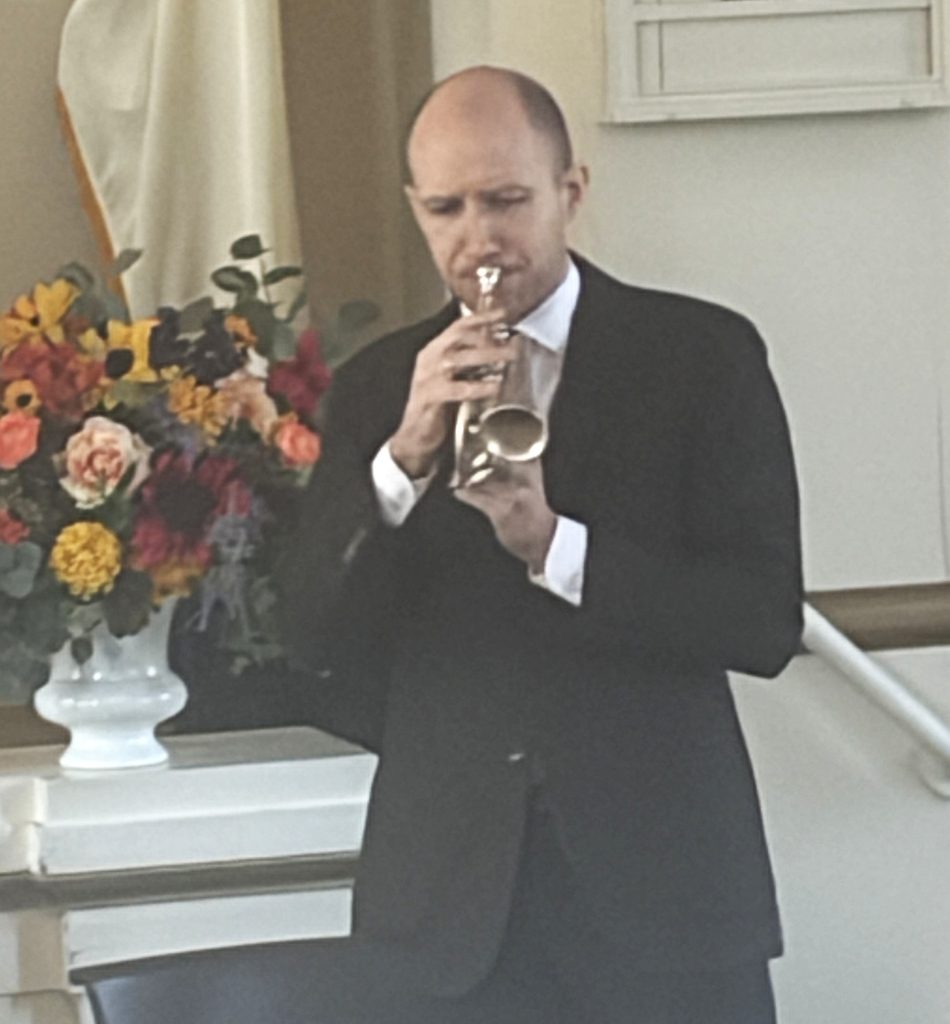
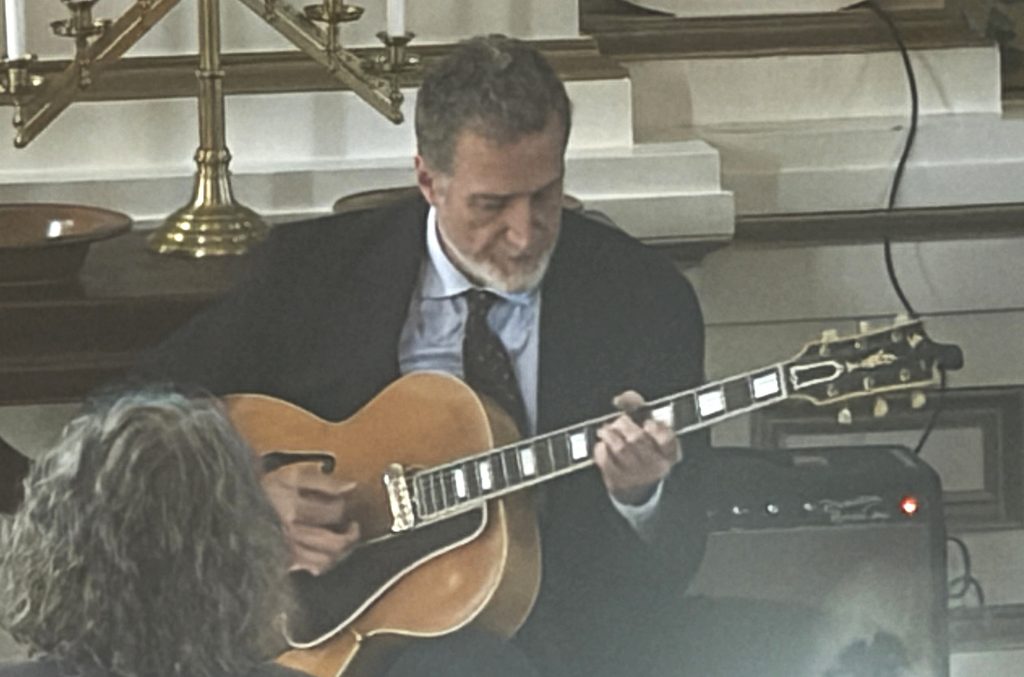
“Embraceable You” featured Boga’s slow, vulnerable trumpet playing with sumptuous harmonies that capture the psychological nuance of falling in love. The song first appeared in the Broadway musical Girl Crazy (1930) with Ira’s lyrics and has been covered by numerous singers. The melody is so memorable that it is considered one of the greatest love songs ever written, and it was played with exquisite longing with a note of nostalgia from Munisteri on guitar and a thrust of finality from Anderson on saxophone.
They concluded with “‘S Wonderful” with its falling thirds followed by a falling fifth, so simple that it threatens to be dull, yet the harmony rescues the music and elevates it into memorable affirmation of abiding love….
This concert presented novel arrangements of interpreting the timeless classics of Gershwin at a time when we should be celebrating the unity of our melting pot country, instead of indulging in hateful, divisive rhetoric.